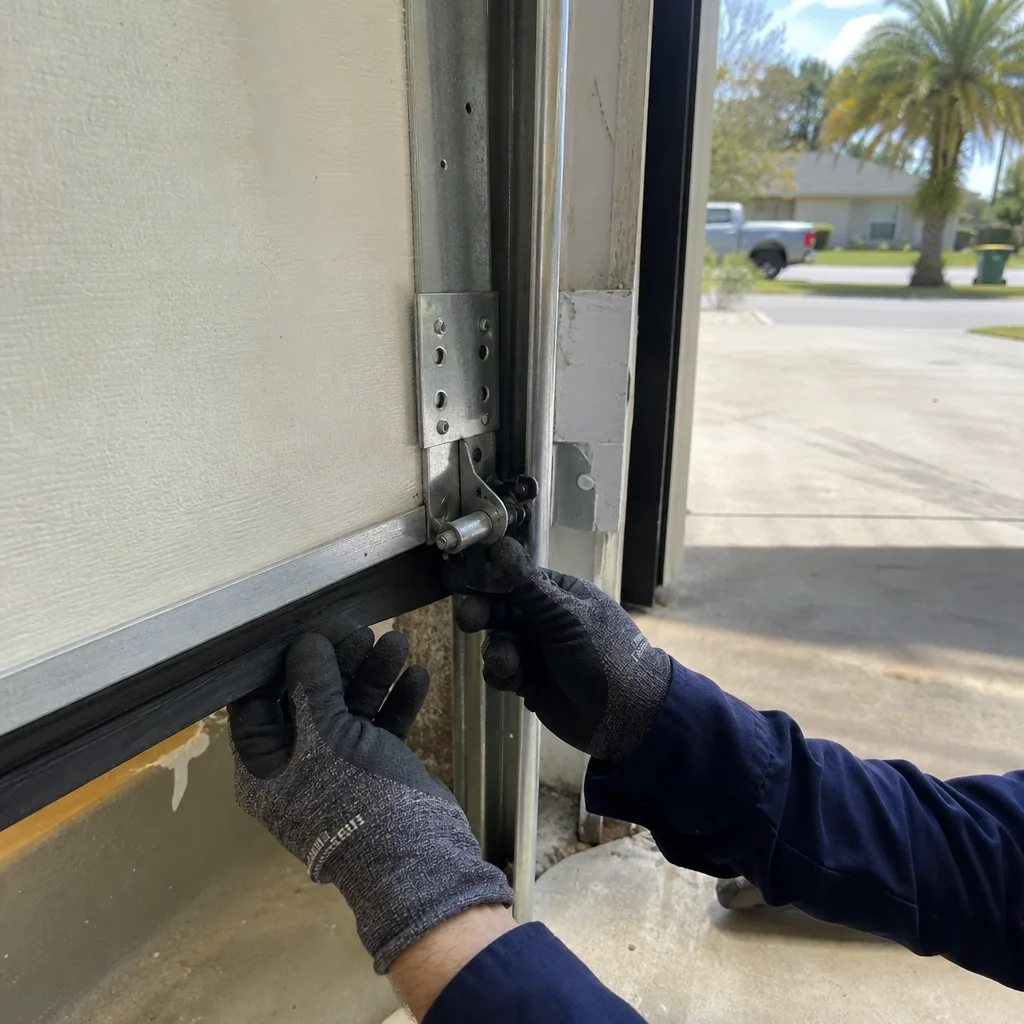
Last updated November 22, 2026
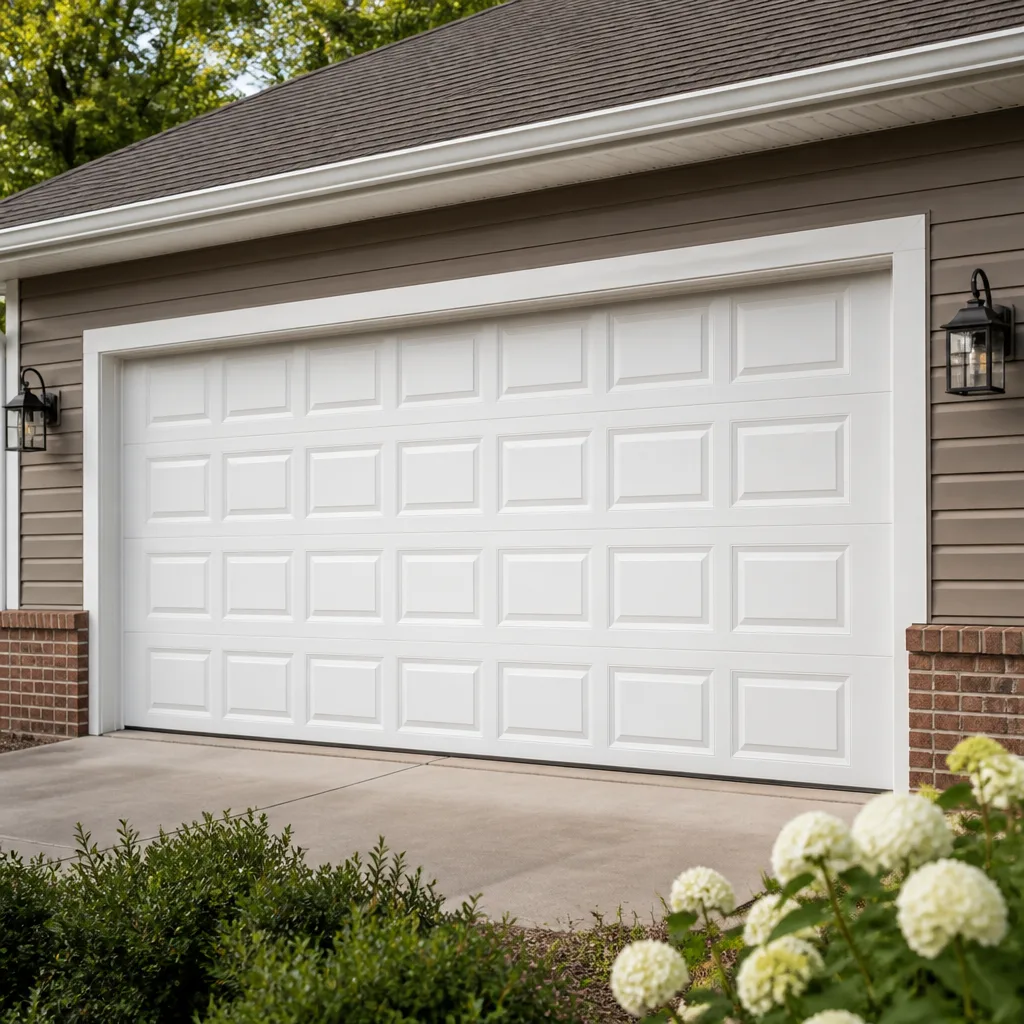 Raised-panel steel
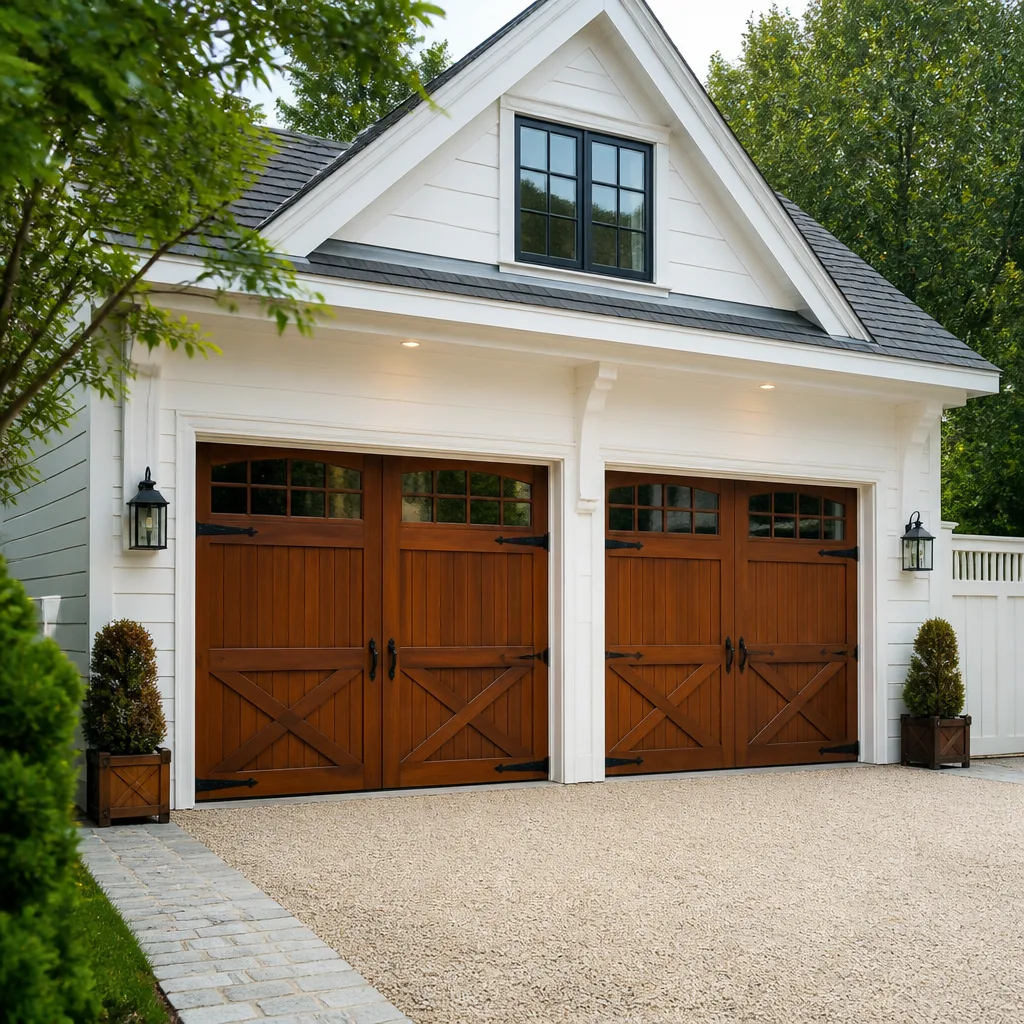 Carriage house
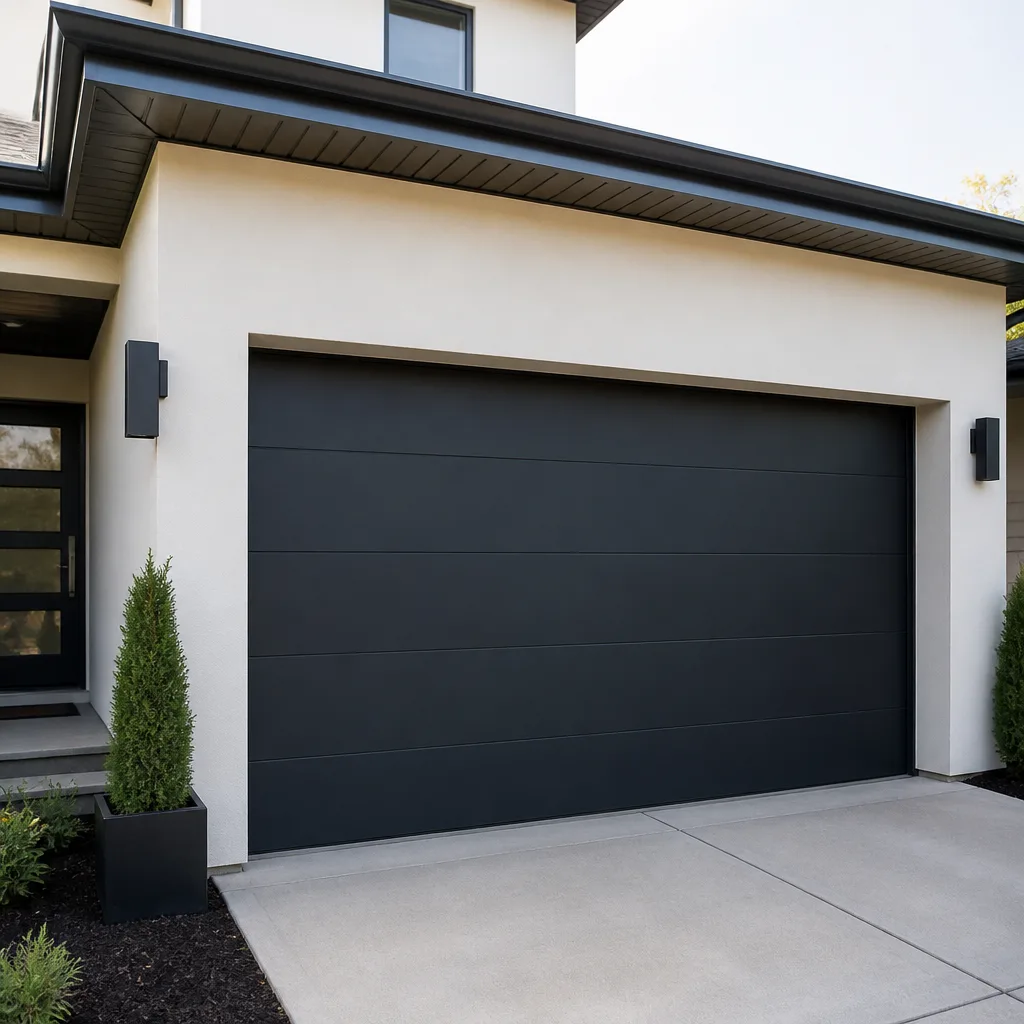 Modern flush
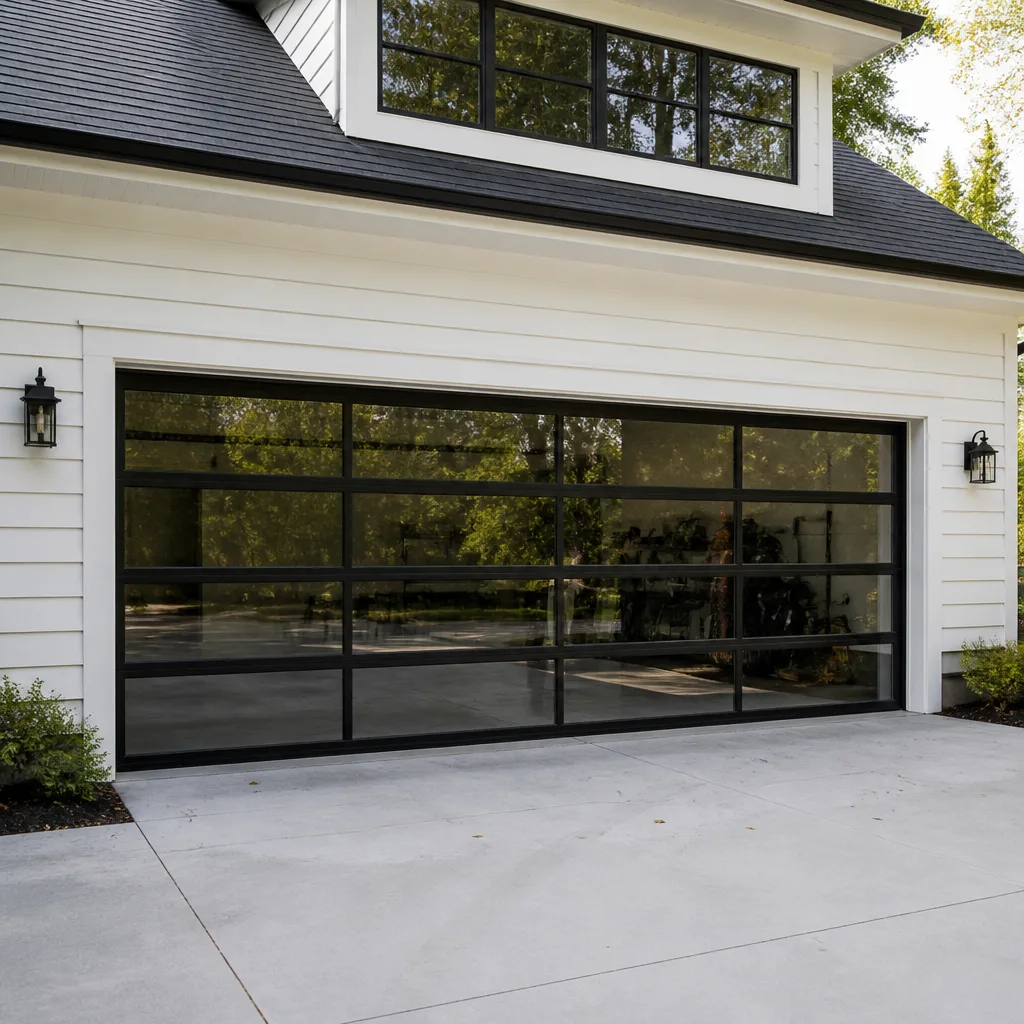 Full-view glass
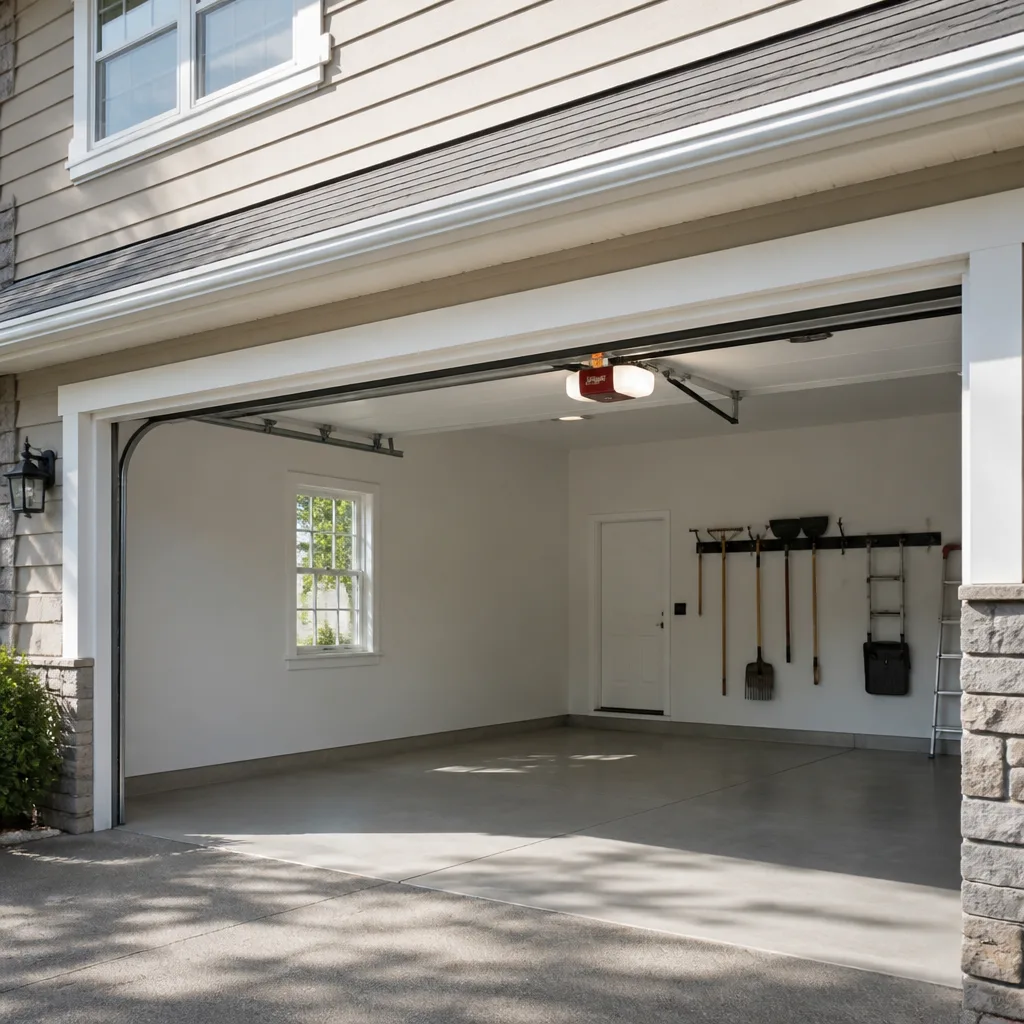 LiftMaster openers
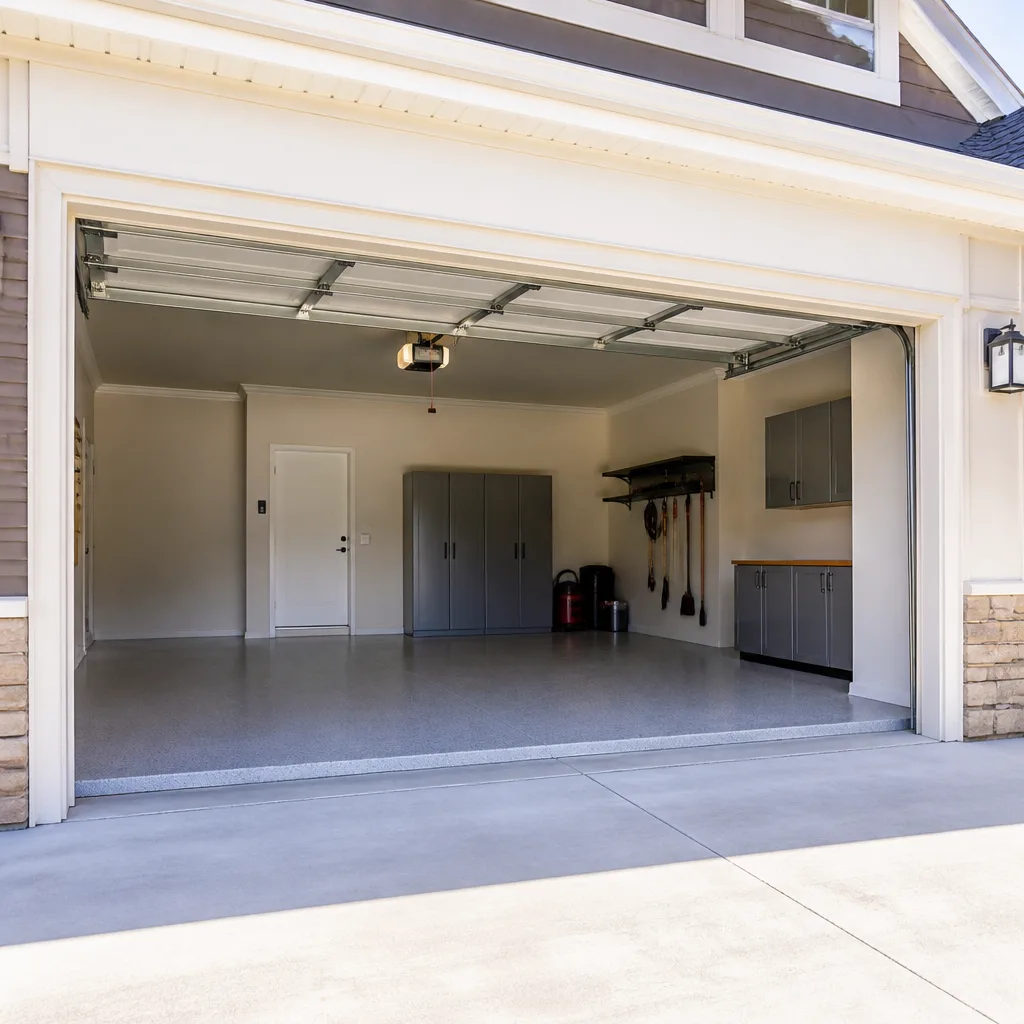 Chamberlain openers
Full 25-point door and opener safety check with every visit - springs, cables, rollers, tracks, and your LiftMaster or Chamberlain opener included
You get a price before we start. It does not change when the pro arrives.
Get your free estimateGarage Door Warning Signs: A Kenwood Homeowner’s Reference Guide
Garage door failures rarely happen out of nowhere. A torsion spring almost never snaps on a quiet Tuesday morning without having given you three to six weeks of signals first. The problem is that those signals are quiet, easy to misread, and easy to file away as “normal wear” until a morning comes when the door won’t lift at all. The trick is learning to tell the difference between a door that’s aging and a door that’s about to quit. This reference guide gives Kenwood homeowners a symptom-to-cause index built around what you actually notice – sounds, movement, speed, gaps, and how your remote behaves – so you can sort a warning sign into one of two categories: schedule it, or stop using the door now.
Quick Answer
Most garage door warning signs fall into two groups: inconvenient ones you can watch for a few days (noise, a rough track, remote dead spots) and safety-critical ones that mean stop using the door and call that day (a snapped spring, a visibly sagging door panel, or a single hanging cable). If you hear a loud bang or the door stops lifting halfway, keep it down and call (844) 699-3427 – our technicians have up to 8 years of experience with this exact equipment.
Styles & brands we work with
- Raised-panel steel
- Carriage house
- Modern flush
- Full-view glass
- LiftMaster openers
- Chamberlain openers
Table of Contents
- The Symptoms You Actually Notice: A Quick Index
- What Your Door Is Telling You Through Sound
- How It Moves: Speed, Balance, and Shimmy
- Visual Gaps, Sagging Panels, and Hanging Cables
- When the Remote Misbehaves
- The Stop-Using-the-Door List vs. the Schedule-It List
- How Kenwood Weather Ages Your Door Differently
- What Each Symptom Says About Which Part Is Failing
- Three Signs That Mean a Call Today
The Symptoms You Actually Notice: A Quick Index
You won’t diagnose a garage door by lifting the hood. In practice, homeowners in Kenwood notice a handful of things first: the door got louder, the door got slower, the door looks crooked, or the remote got temperamental. That’s your starting point. From there, the symptom points back to a component. In our experience, mapping the noise you hear to the part behind it cuts the guesswork way down before a technician even arrives.
Here’s the index we recommend keeping in mind. Read it once, and you’ll have a mental shortcut for every odd behavior your door develops:
- A single loud pop, then the door won’t lift: a torsion spring has likely broken. This is a stop-using-the-door symptom.
- A repeating squeak or squeal as the door cycles: dry rollers, a dry hinge, or a torsion tube begging for lubrication.
- A rattling or clunking over each panel: loose hinge fasteners, worn rollers, or a track that’s shifted out of alignment.
- A grinding noise from the opener housing: worn opener gears or a failing belt/carrier – an opener-repair issue, not a door issue.
- The door rises slowly or stalls: a tired opener motor, a weak spring, or a door that’s gone out of balance.
- A visible sag in one panel: bent or broken hinges, or panel damage that worsens with each cycle.
- The remote works only up close: a failing remote battery, worn safety-sensor alignment, or an opener that’s lost its range.
- The door reverses on its own mid-descent: a misaligned safety sensor or travel-limit setting that needs a reset.
Notice something here: none of these are one-size-fits-all. A single squeak is a weekend task. A single bang is a same-day call. The rest of this guide is about separating those two worlds, with the local details that national warning-sign guides tend to skip.
What Your Door Is Telling You Through Sound
Sound is the earliest warning sign you’ll get, and it’s the easiest to filter out as background noise. A garage door that hummed quietly when it was new should keep humming quietly. When it starts talking back, the pitch, the rhythm, and the timing all matter.
Start by isolating the type of noise. Stand in the garage with the door closed, then have someone cycle it while you listen. There are four families of sound, and each one points somewhere different:
- Squeak or high-pitched squeal. Metal-on-metal contact, usually from dried-out rollers, hinges, or the torsion tube. Lubrication is the first step; a technician visit is warranted if the noise persists after a proper lube.
- Rattle or clunk, rhythmic over each panel. A loose hinge, a worn nylon roller, or a section bolt backing out. Rhythmic rattles that worsen are a sign of misalignment in the track.
- Grinding, coming from inside the opener housing. This is gear wear inside the opener itself, and it’s typically a replace-or-rebuild decision on the operator, not the door. It’s also where knowing your brand matters – we work on LiftMaster, Chamberlain, Genie, and the rest, so the fix doesn’t depend on what brand of opener you happened to inherit.
- A single loud pop, followed by silence and the door stuck shut. That pop is the sound of a tensioned component failing. Stop. Don’t cycle the door again. A broken spring symptoms this way, and the accompanying snap of tension is why springs are handled as high-tension work, not a DIY project.
One more sound cue worth knowing: a door that starts slamming the last few inches before the floor. That’s usually a travel-limit adjustment on the opener, and it puts a lot of stress on the bottom panel and the opener’s carrier over time. Fixing it before the carrier cracks saves a noticeably bigger repair.
How It Moves: Speed, Balance, and Shimmy
Sound is hearable. Movement is watchable. Both are warnings; most homeowners only catch the second one when it gets bad.
A balanced door moves at the same speed up as it does down and doesn’t need a hand to hold it in the middle of travel. A door that’s visibly slower on the climb, or that needs two attempts to close, is telling you the springs have lost some of their lift. Springs lose strength gradually. The door doesn’t fail in a day; it fades over a stretch of weeks or months. What most people write off as “cold morning sluggishness” is often a spring with less tension than it should have. When the lift is uneven, the opener picks up the slack, and the opener is the most expensive part to replace. Catching a weakening spring during a routine visit beats paying for the spring and the opener.
The other movement signal is shimmy – a door that wobbles or cocks slightly as it moves. Causes stack up in a predictable order:
- Worn nylon rollers on one side, which pull the door unevenly through the track.
- A track that has shifted out of square (common after an impact to a panel).
- A torsion tube that’s lost a bearing, which lets the door torque as it lifts.
- Bent hinges on one or more panels, which cause one edge of the door to lead the other.
Shimmy almost never resolves on its own. Each cycle compounds the wear, so a door that’s shimmying today is on a schedule to a bigger repair – typically a track alignment plus a hinge or roller replacement, rather than a single-part fix. A door that shimmies and stalls is closer to emergency territory.
Visual Gaps, Sagging Panels, and Hanging Cables
Some warning signs never make a sound. They show up as a visible gap no homeowner can miss once they know where to look. This is where you separate the “inconvenient” warning signs from the “stop using the door now” ones, and this section matters more than any other in the guide.
Start with a slow, deliberate scan while the door is fully down and fully up:
- A gap along the bottom edge or between panels. If daylight shows through a closed door in Kenwood, the door is either out of alignment on the tracks or a panel has been knocked out of its hinge housing. Small gaps get bigger with each cycle.
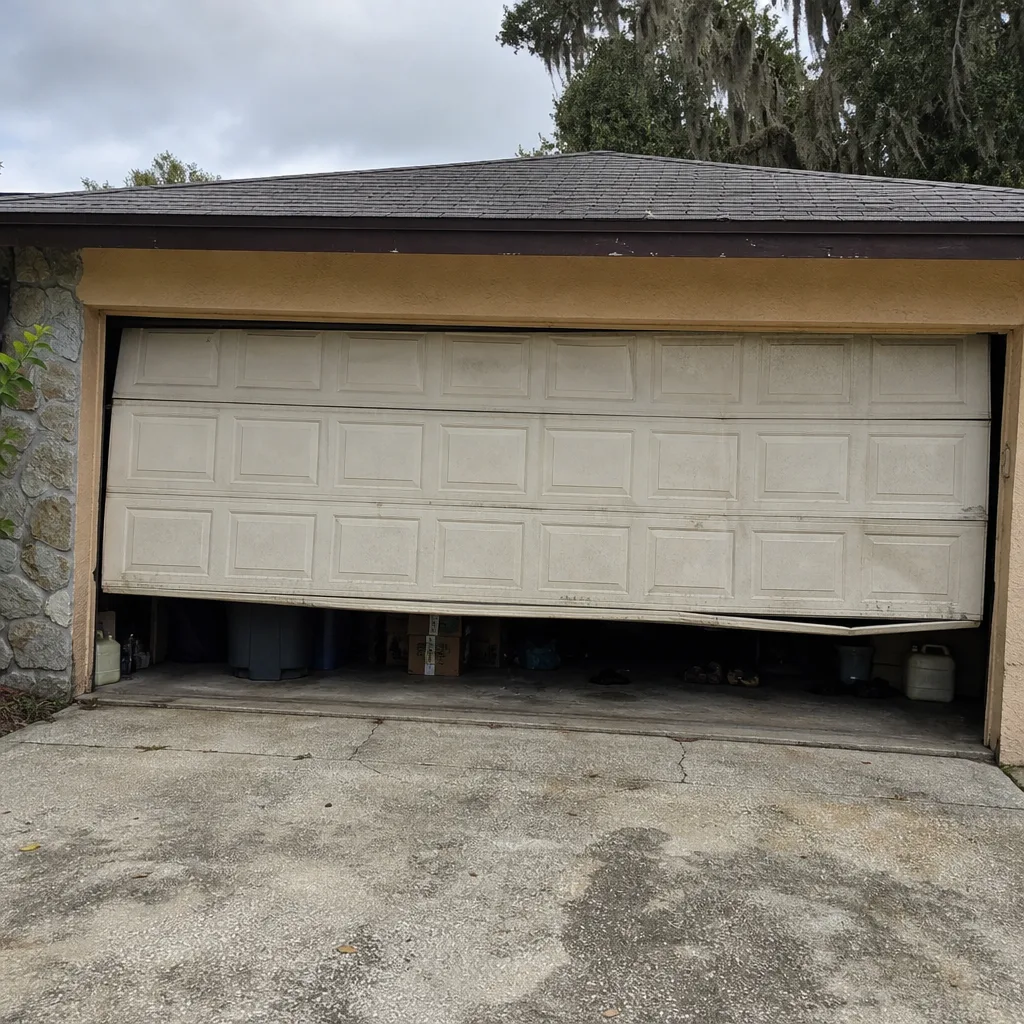
- A visibly sagging or bowed panel. This is stop-using-door territory. A bent panel loads the hinge and track unevenly and can bind the door mid-travel. Cycle it and you risk the door coming off-track.
- A cable that’s hanging slack, crossed, or off its drum. Also stop-using-door. Cables carry the same tension as the springs, and a loose one can whip, snag, or dislodge. Don’t touch it – call a technician.
- A spring that’s visibly separated at a coil, sagging, or missing a stretch of coils. Broken-spring territory. Stop cycling and call the same day.
- Rust streaks near hinges, rollers, or the bottom panel. Not urgent by itself, but a strong cue that hardware is going to fail early. Worth a scheduled visit.
- Weather seal that’s peeled, torn, or gone hard. Doesn’t stop the door, but it lets in rain, insects, and drafts. A replaceable seal is cheap; the damage a bad seal does to the bottom panel is not.
Notice the split. Nothing on that list makes the door a hazard in itself, but three items are actively dangerous to operate. Keeping that distinction clear is the whole point of a symptom-to-cause reference.
When the Remote Misbehaves
Remote problems feel like they should be the easiest to dismiss, and they’re the ones most worth taking seriously. A remote that works inconsistently is telling you something is fading in the opener or in the safety loop, and both of those get worse over time. If your opener has been dropping the remote for a couple of weeks, or you’re pressing the button twice to make it catch, that’s a warning sign, not a fluke.
Sort the symptom by behavior:
- Remote works within a few feet but not from the car. Either the remote battery is dying, the opener antenna is obstructed, or the safety sensors are misaligned enough to reduce signal integrity. Check the sensors first – the LED on each sensor should be steady, not blinking.
- Remote works for one door in the household but not the other. Usually a programming issue on the second opener, or a limit switch that needs re-teaching. A technician can re-pair the remote without replacing anything.
- Remote works sometimes, then stops for hours. Increasingly common on modern connected openers (Chamberlain myQ, LiftMaster) where a home network change or firmware update can knock the app or the remote pairing out of sync. Old mechanical openers don’t do this; connected ones do. This is where a technician familiarity with both worlds pays off.
- Wall button works but the remote doesn’t (or vice versa). A logic-board or receiver issue inside the opener. It’s not the remote and it’s not the door – it’s the unit.
- Door reverses on the way down, no obstruction. The safety sensors or the travel limits are off. This is usually a scheduled visit, but if the door reverses mid-descent repeatedly, stop using it until a technician checks the sensor alignment and limit settings.
One thing we’ve seen consistently: a remote that’s “acting up” for a month is nearly always the opener telling you it’s on its last stretch. Catching that early can mean a repair on the existing unit instead of replacing it. If you’re already past the point of no return, the conversion is straightforward, and we handle garage door opener repair for both legacy and connected systems.
The Stop-Using-the-Door List vs. the Schedule-It List
This is the section that does the most work. Everything else is diagnosis. This is decision-making. If you learn nothing else from this guide, learn the difference between these two lists.
Stop using the door today. Call for emergency service.
- A broken torsion spring (visible separation, sagging, or a pop followed by no lift).
- A visible sag or bow in any panel.
- A cable that’s slack, crossed, off its drum, or visibly kinked.
- The door jams or stops partway on either direction of travel.
- The door drops faster than normal on the way down.
- The door is off-track on one side, or visibly cocked in the opening.
- Any smell of burning or a visible scorch mark near the opener or wall switch.
Schedule an appointment within a reasonable window.
- Noise that’s new but consistent (squeaks, rattles, grinding inside the opener).
- The door is slowing down but still completing a full cycle.
- A shimmy or wobble on the way up.
- Daylight showing at the bottom, small gaps between panels.
- Remote inconsistency, no associated safety-sensor alert.
- A missing or torn weather seal, no visible panel damage.
- Rust streaks on hardware that’s still functioning.
The line between these lists is not “how annoying is this” – it’s “is this safe to operate.” Springs and cables are high-tension components. A failed one holds stored energy that has to be released by hand, and that’s a trained technician’s job, not something to attempt in Kenwood humidity with a pair of vice grips and YouTube. If a symptom appears on both lists in different words, treat it as the stop list.
How Kenwood Weather Ages Your Door Differently
Most warning-sign guides are written for a generic climate. Kenwood’s weather doesn’t behave that way, and the wear pattern it produces on a garage door is specific enough that it’s worth its own section.
Three local conditions age doors here faster than in most of the country, and each one shows its wear differently.
Humidity works on hardware first. Hinges, rollers, and torsion tubes dry out their lubrication more quickly in the wet months, which is why we hear more squeaks and rattles in Kenwood than a well-lubricated door in a drier climate would produce. The fix is regular lubrication, not parts. But a door whose lubrication has been allowed to lapse for a full season is a door where hinges and rollers wear out earlier than their rated life.
UV exposure works on the bottom seal and panels. The weather seal under the door degrades to a hard, cracked state faster here than in a milder climate, and a hardened seal fails to seal, letting in rainwater that finds its way to the bottom panel and the frame. Panels that face sun exposure at the same angle all day will fade and can develop a slight warp on the bottom edge. Nothing to do about the angle, but the seal is worth checking every few months.
Rain and humidity together are what cause the rust streaks you see on hinges and rollers – small signs today, actual failure points later. Letting rust sit on a roller means it binds against the track, which causes shimmy, which puts load on the hinges, which is where a slow-down starts.
The upshot: Kenwood homeowners should expect to see sound and rust warnings earlier than a national guide would predict, and should treat the weather seal and the lubrication schedule as their two highest-payoff maintenance items. If a door has been through a wet season without either, it’s worth a check-in call.
What Each Symptom Says About Which Part Is Failing (and How Much Runway You Have)
Once you’ve identified a symptom, the next question is how much time you have before it becomes an emergency. This is where most guides stop and this one keeps going. Here’s the mapping we use:
- New, consistent squeak at the rollers or hinges. Which part: rollers or hinges. Runway: weeks to months. Risk of emergency: low, as long as lubrication happens. Risk if ignored: hardware binds, causes shimmy, accelerates wear on the track.
- Rhythmic rattle over each panel. Which part: hinge, hinge bolt, or roller. Runway: 1 to 4 weeks. Risk of emergency: moderate – a loose hinge can pull a panel out of alignment over time, and a misaligned panel can bind the door mid-travel.
- Door rises noticeably slower than it used to. Which part: torsion spring losing tension, or a fading opener motor. Runway: 3 to 8 weeks. Risk of emergency: moderate – springs rarely modulate, so the failure when it comes is sudden and the door will not move.
- Shimmy or wobble on the way up. Which part: worn rollers, track out of square, or a torsion bearing. Runway: 2 to 6 weeks. Risk of emergency: moderate – if the track shifts far enough, the door comes off-track and stops hard.
- Visible panel sag. Which part: hinge, panel, or track. Runway: stop using the door now. Risk of emergency: high. Cycling a sagging panel strains every hinge on that section.
- Cable slack, kinked, or off the drum. Which part: cable or cable drum. Runway: zero – stop using the door. Risk of emergency: high. Cables sit under the same tension the springs do.
- A single pop, then no lift. Which part: torsion spring. Runway: zero. Risk of emergency: high. It will not resolve; it needs a technician.
- Remote works within 5 feet, not from the car. Which part: remote battery, safety sensors, or opener receiver. Runway: 1 to 3 weeks. Risk of emergency: low – the door still works, the control is failing.
- Grinding inside the opener housing. Which part: opener gears or belt. Runway: 1 to 4 weeks. Risk of emergency: moderate – opener can fail outright, which locks the door in place.
Two important caveats on the runway numbers. First, they’re generalized. A door that’s already on the older end of its lifespan loses runway faster. Second, the “stop-using” items don’t have a runway – they’re the exact set of conditions where running the door “just once more” is what turns a spring repair into a panel replacement.
Three Signs That Mean a Call Today
Most warning signs give you time. These three don’t. If any of them shows up, call today, not next week.
- A single loud pop followed by the door not lifting. That pop is a spring failure. A spring replacement on a broken coil is a standard fix on a safe door. A spring that’s been cycled after breaking can load the remaining components unevenly. Same-day service turns a spring replacement into a spring replacement; going a few days on a dead spring is where damage to cables and opener carriers starts to say hello.
- A visibly sagging or bowed panel. The door is now structurally off-balance. Every cycle stresses the hinges and the track further. Stop using it and get a technician in to look at whether it’s a hinge, panel, or track issue. Sometimes one panel replacement is all it needs. Sometimes the door’s been off-track for a while and needs a full alignment.
- A cable that’s hanging slack, kinked, or off its drum. Cabinets hold tension at their hinges, but a garage door holds tension in its cables and springs. A slack cable is under the same tension the springs are. Don’t touch it, don’t wind it, don’t try to re-seat it. Call and get a technician to the door today.
Beyond those three, treat “the door won’t move at all” as a call-today item even though it wasn’t on the original list. If the door is stuck, you’re one phone call from knowing whether it’s the spring, the opener, or a lockout.
Common Mistakes to Avoid
- Lubricating the tracks. Oil on the track is a classic mistake. Tracks are meant to be clean and dry; lubrication goes on the rollers, hinges, and torsion tube. Oil on the track collects grit and accelerates roller wear.
- Trying to fix a spring or cable yourself. These components store enough energy to cause serious injury. They’re the definition of a trained-professional task, and no shortcut is worth the risk.
- Ignoring a new sound because “it’s always done that.” A garage door is loud by nature, but it’s not supposed to sound different from how it sounded a month ago. If you can’t remember what it used to sound like, cycle it slowly and listen to each section as it passes.
- Assuming a slow door is just old. A door that’s genuinely slowing is usually a spring that’s lost tension. Catching it during a routine visit is a spring adjustment or replacement; catching it after the opener has been compensating for months is a spring plus an opener.
- Testing a door with a visibly sagging panel “just to see if it still works.” It might, once. That once is a lot of load on a panel that’s already out of true.
- Replacing a remote or battery repeatedly when the opener is the issue. If two remotes fail in a short window, the problem is the receiver, not the batteries. A technician can test the receiver directly.
- Waiting until the door won’t move to book an appointment. The best time to schedule garage door repair is when the symptoms are still just symptoms – a slow-down, a shimmy, a new rattle. Same door, fixed right, is the goal; a busted door fixed is the fallback.
See the difference
 Before
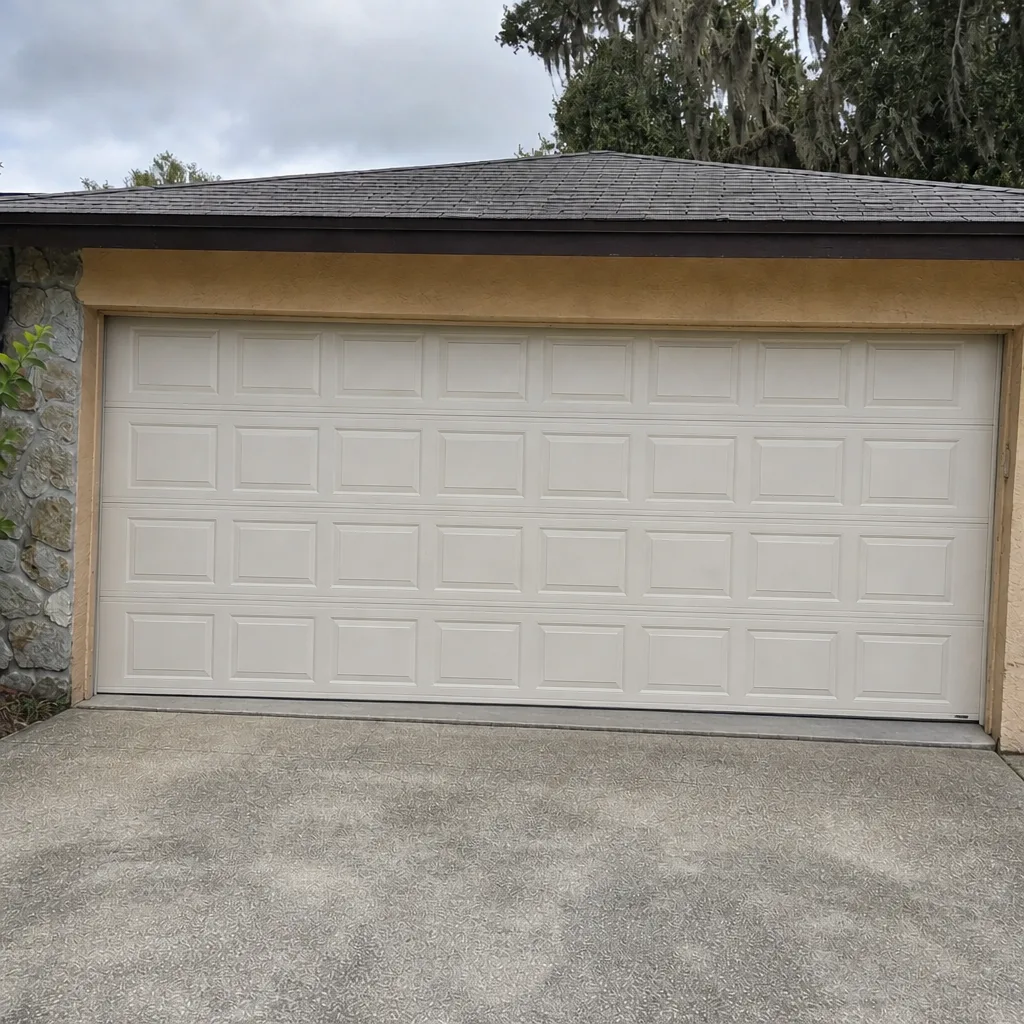 After
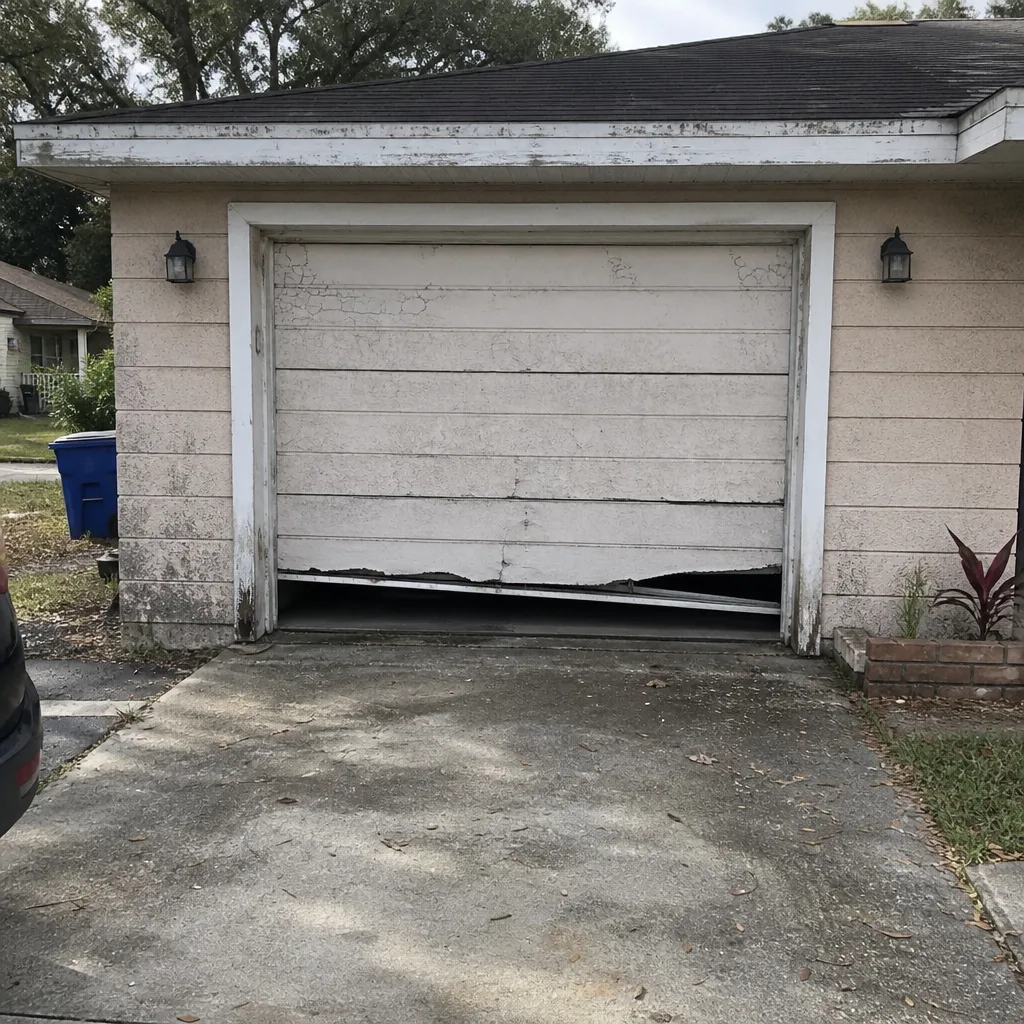 Before
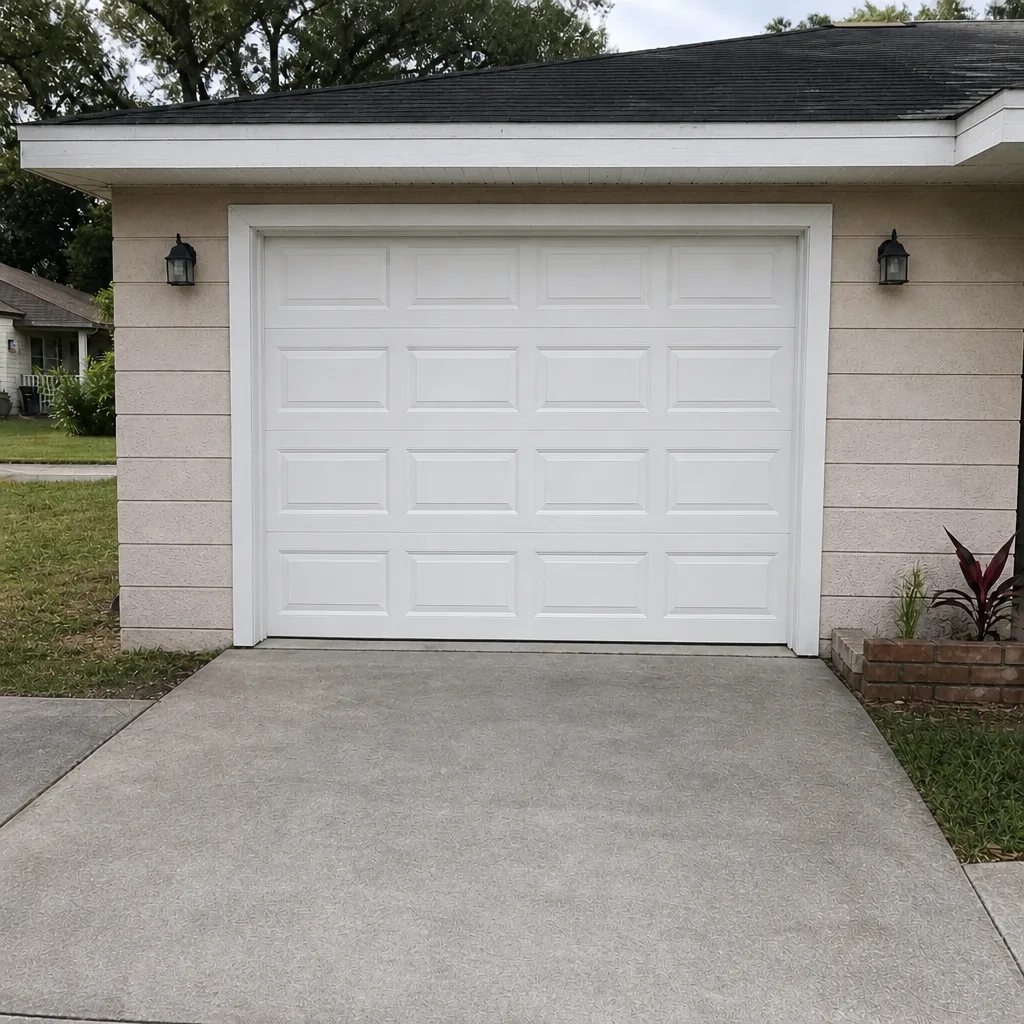 After
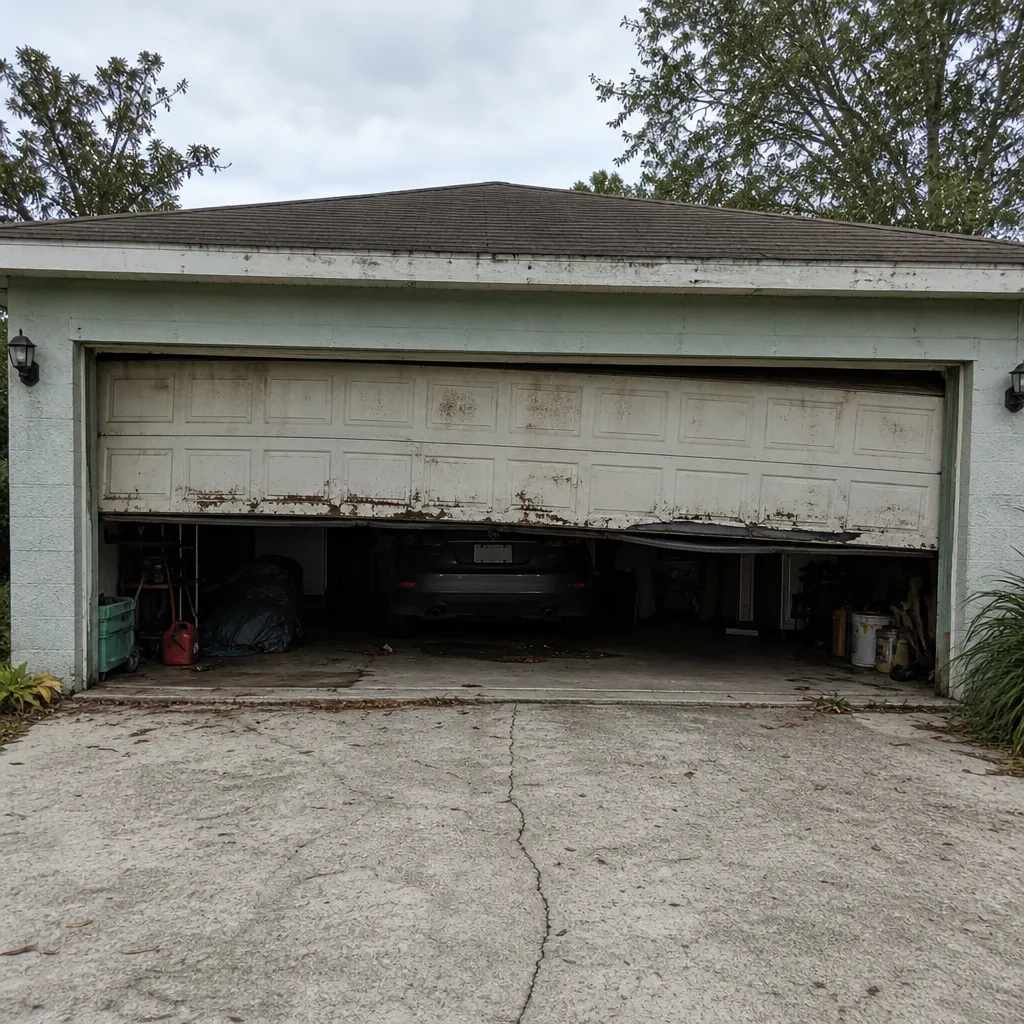 Before
 After
When to Call a Professional
You should call a professional the moment a warning sign lands on the stop-using list above. That’s a spring, a cable, a sagging panel, or the door stuck mid-travel. Beyond that, any consistent symptom that’s new in the last two weeks – a rattle, a slow-down, a shimmy – is worth a call, because the alternative is waiting for it to become one of the three signs that put you on the phone anyway. If you’re not sure which category a symptom belongs to, describe it and we’ll tell you: emergency service is a core offering for us, not an upsell, so we’d rather hear about a squeak than have you discover a broken spring next week.
Garage Door Repair Kenwood offers free estimates in Kenwood – call (844) 699-3427. Every price is quoted and agreed before any work starts, so you’ll know the number before a technician touches the door. If you’d rather get ahead of a failure rather than react to one, we also handle full garage door installation when a door has reached the end of its service life – same call, same specialist.
Frequently Asked Questions
The earliest warning signs are usually auditory and behavioral: a new squeak or rattle, a door that’s slower than it used to be, a shimmy on the way up, or a remote that only works from up close. Any one of these alone is a scheduled-appointment symptom, not an emergency – but a new sound combined with a slow-down should prompt a call within a couple of weeks, before the spring or opener fails outright. Call (844) 699-3427 if you’re not sure which category yours fits.
A broken spring is usually obvious after the fact. You’ll hear a single loud pop as the spring snaps, and the door won’t lift at all – the opener may run but the door stays down. Visually, look at the torsion bar above the door: a healthy spring is one continuous coil, while a broken one shows a visible gap, or a coil that’s sagged or separated. If you suspect a broken spring, stop cycling the door and call (844) 699-3427 the same day. Springs are high-tension components and should only be handled by a trained technician.
Yes – same-day repair is often possible for the warning signs above. Emergency service is a core offering for us, so if the door won’t move, a spring has broken, or the door is off-track, call (844) 699-3427 and get scheduled as soon as possible. We work on your brand across LiftMaster, Chamberlain, Genie, Clopay, Amarr, Wayne Dalton, Craftsman, and Raynor, so diagnosis on your existing system starts without needing a stock check.
The price is quoted and agreed before any work starts. We assess the door, name the repair, and give you a written estimate. What you see is what you agree to; if a repair turns out to involve something not evident during the first look, we stop and re-quote before continuing. Nothing is billed that you didn’t agree to. Call (844) 699-3427 for a free estimate.
Yes – the local pros we connect you with are licensed and insured as their state requires, and our technicians have up to 8 years of experience on the equipment they’re working on. We work on the brands homeowners already own, including LiftMaster, Chamberlain, Genie, Clopay, Amarr, Wayne Dalton, Craftsman, and Raynor, and we’ve built our practice around spring repair, opener repair, installation, and emergency service as a full-set of services rather than one specialty and a deep bench of “call someone else” for the rest.
Inconvenient warning signs mean the door still completes a cycle and isn’t a safety hazard – a squeak, a rattle, a slow-down, a shimmy, or remote inconsistency. Stop-using-the-door signs mean the door’s structure or tension system is compromised – a broken spring, a sagging or bowed panel, a slack or off-drum cable, or a door that jams or stalls partway. If any stop-using sign appears, don’t cycle the door and call (844) 699-3427 for same-day service. Safety first, and it’s not close.
The Bottom Line
Garage door failures are almost never silent. They send signals in three categories – sound, movement, and visual – and they send them for weeks before a real failure. The whole job of this guide is teaching you to read those signals correctly, so you can move from “I think something’s up” to either “I’ll schedule it” or “I’m stopping the door and calling now.” Three loud warning signs are the ones that put you on the phone today: a single pop followed by no lift, a visibly sagging panel, and a slack or kinked cable. Everything else gives you a runway – a window to schedule a proper repair, not a scramble to catch up. If you’re not sure which category your symptom belongs to, call us. A free estimate costs you nothing, and catching a slow spring beats replacing a broken opener. Call (844) 699-3427 today, and take the first step toward getting your garage door, in Kenwood, running as it should.
Written by the team at Garage Door Repair Kenwood.