Last updated November 22, 2026
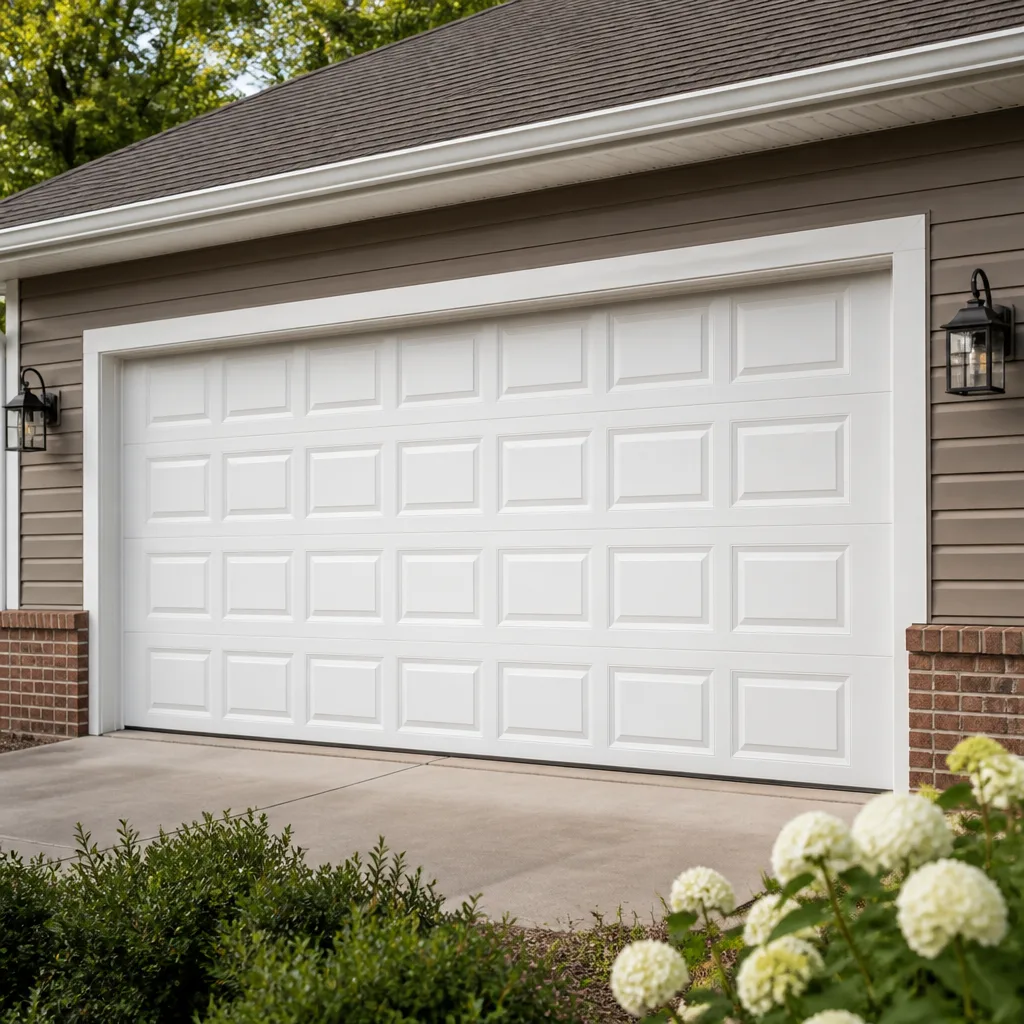 Raised-panel steel
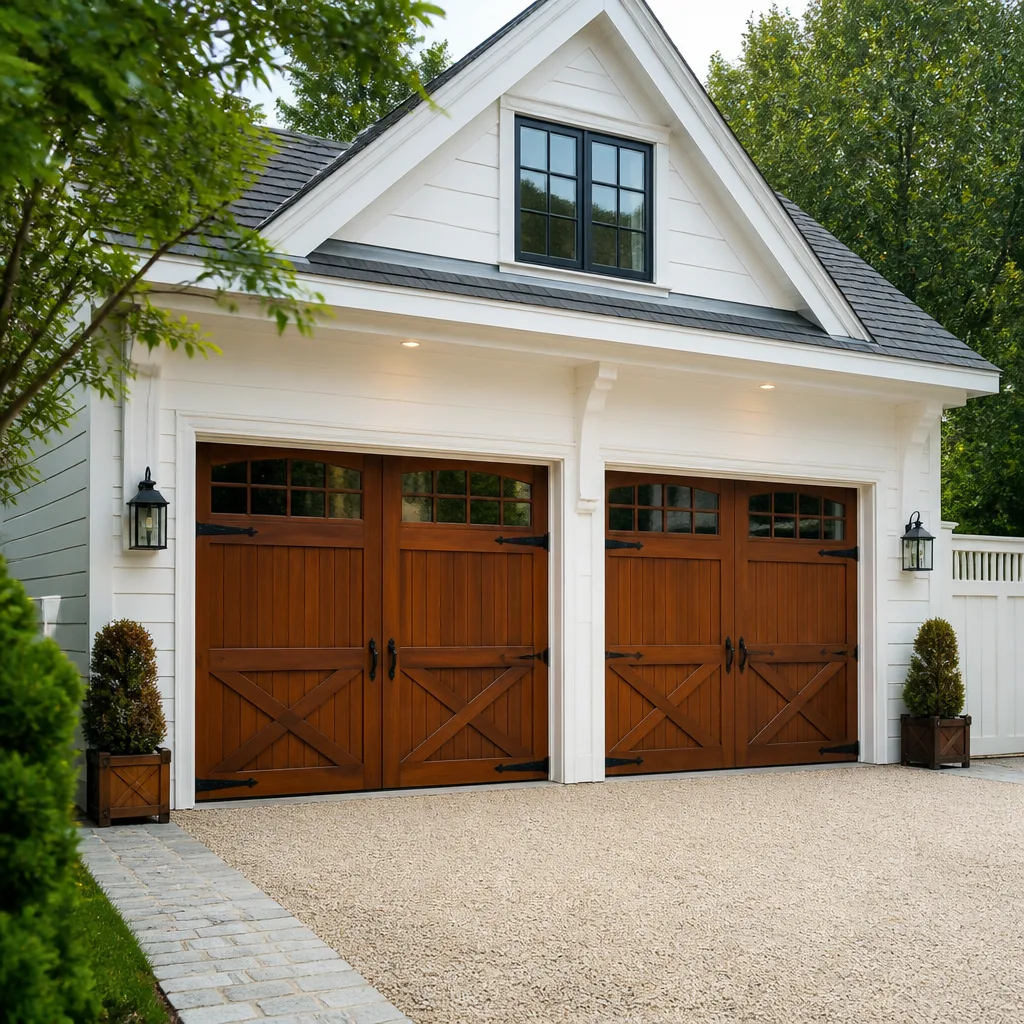 Carriage house
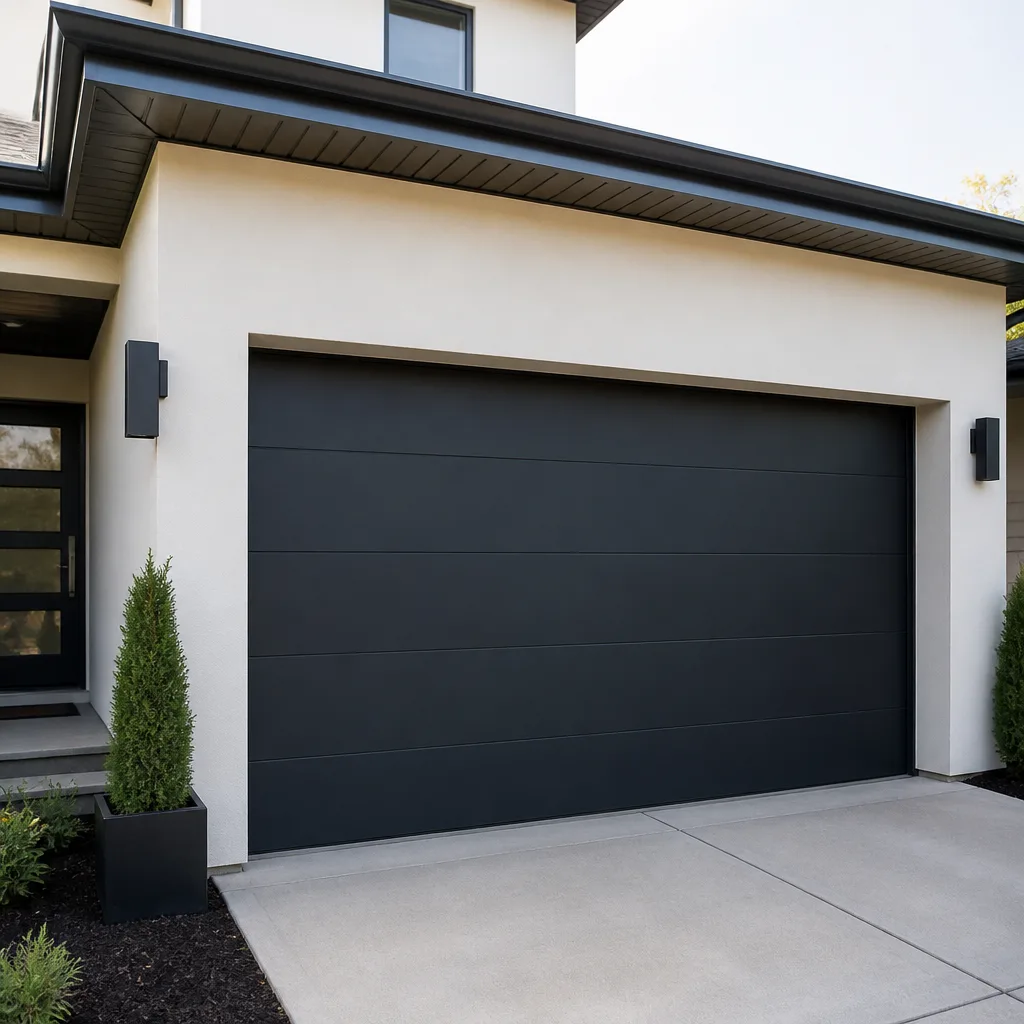 Modern flush
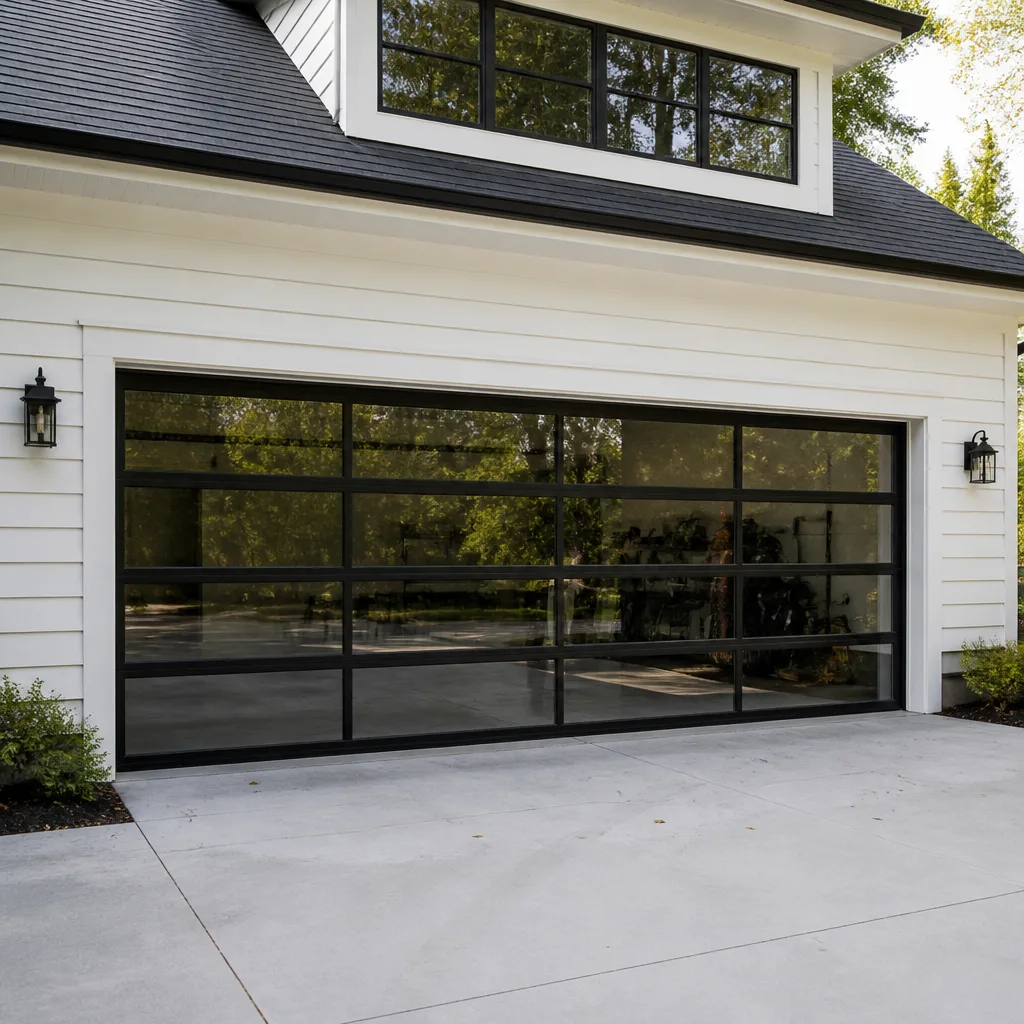 Full-view glass
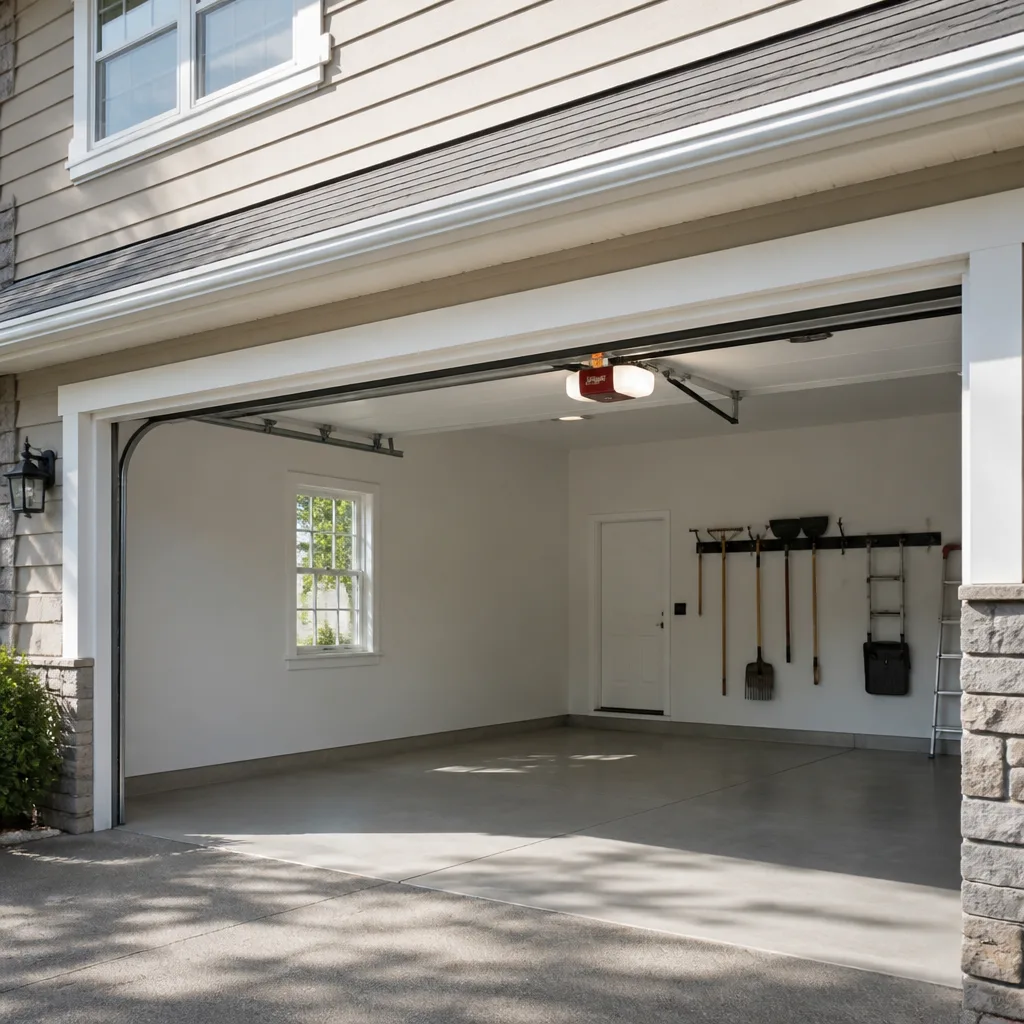 LiftMaster openers
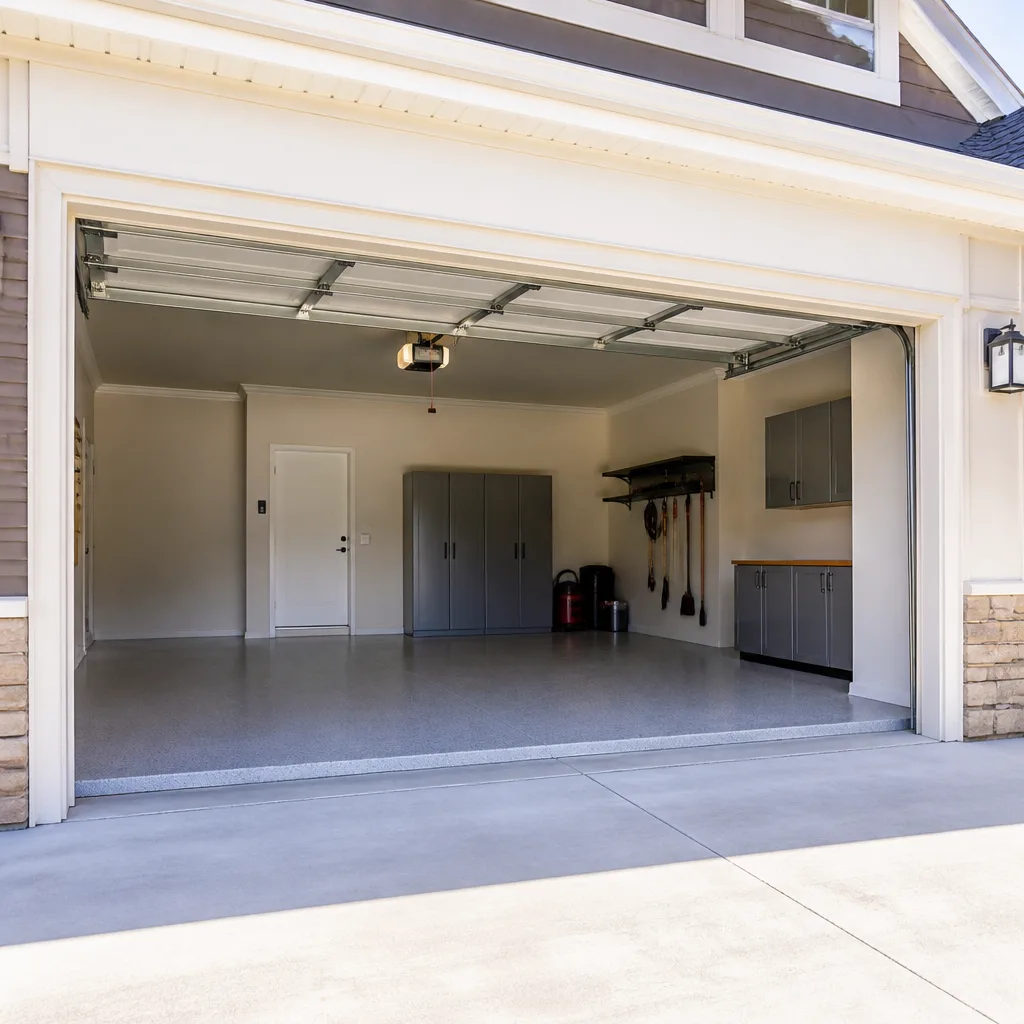 Chamberlain openers
Full 25-point door and opener safety check with every visit - springs, cables, rollers, tracks, and your LiftMaster or Chamberlain opener included
You get a price before we start. It does not change when the pro arrives.
Get your free estimateGarage Door Emergency Preparedness Guide for Kenwood Homes
Most garage door advice you’ll find online is written for the moment after something breaks. This guide starts earlier. During Hurricane Ian, thousands of Florida homeowners reached for their manual release cord and found it seized from humidity and years of disuse, right when they needed to move a car out or shut the opening before landfall. The door was fine. The backup system wasn’t. That’s the lesson worth carrying into every storm season here in Kenwood: preparation is the actual emergency plan. Below you’ll learn how to test and free a stuck release, how to brace a door opening safely during a named storm, what to do in the first ten minutes of three common failures, how to line up a real emergency contact before you need one, and how to judge storm damage once the weather clears.
Quick Answer
A garage door emergency in Kenwood is best handled by preparing three things before storm season: a manual release that actually works under load, a stocked bracing kit sized to your opening, and a verified emergency garage door contact saved in your phone. During a named storm, a door that fails open or stuck closed affects evacuation and building pressure on the home, so it needs to be manually secured or professionally repaired rather than forced. If a spring, cable, or opener has failed, don’t run the door. Call (844) 699-3427 for emergency service and a free estimate.
Styles & brands we work with
- Raised-panel steel
- Carriage house
- Modern flush
- Full-view glass
- LiftMaster openers
- Chamberlain openers
Table of Contents
- How do you test the manual release before a storm?
- What do you do if the manual release is already seized?
- How do you manually secure a garage door opening during a named storm?
- What are the first 10 minutes of three specific garage door emergencies?
- How do you pre-identify a 24/7 garage door contact before you need one?
- Which post-storm damage is cosmetic, structural, or unsafe to operate?
- Common Mistakes to Avoid
How do you test the manual release before a storm?
Test the manual release by pulling the red cord with the door in the fully closed position and the opener disconnected, then lifting the door about halfway by hand to confirm the door travels freely and the trolley releases cleanly. Reconnect by lowering the door until the trolley arm re-engages, then run the opener once to reset travel. Do this at the start of every storm season, and again in the spring. A release you haven’t touched in eighteen months isn’t tested, it’s assumed.
Here’s how a real test should go, in order:
- Close the door fully and unplug the opener (or switch it off at the breaker) so the door can’t move unexpectedly.
- Locate the red emergency release handle hanging from the trolley. On most Genie, Clopay, and LiftMaster installations it’s a short cord with a T-handle, usually within reach at adult shoulder height.
- Pull straight down firmly, not sideways. The trolley should disengage with an audible click.
- Lift the door by hand about two feet. It should move with steady resistance from the springs. If it feels heavy or won’t lift, stop. That’s a spring or balance problem, not a releasing problem.
- Lower the door slowly by hand. It shouldn’t drop.
- Re-engage the trolley by hand, then run the opener through one open/close cycle to confirm travel limits are intact.
A manual release that works cleanly under load is the single most useful piece of equipment in a Kenwood garage during hurricane season. It costs nothing to test. It costs a great deal to discover it’s frozen when the power is out.
If the opener itself is the part that’s failing, our garage door opener repair page covers the diagnostics we run on smart and legacy systems. But before you call anyone, know whether your manual release is working. That single fact tells the emergency technician whether they’re dealing with a power problem or a door problem.
What do you do if the manual release is already seized?
If the manual release is seized, don’t yank harder. Seized releases usually mean the trolley is corroded, the release cord has stiffened from humidity, or the trolley arm is binding against the rail. Forcing it can bend the trolley carriage or snap the cord, and either one takes the door out of manual operation entirely. You need a trained technician under the hood of this one, not a harder pull.
Here’s the sequence we recommend when the release won’t budge:
- Check for power first. If the opener has power, use the wall button or remote to fully open the door, then try the release with the door in the open position. The trolley has less load on it when the door is up.
- Inspect the cord and handle. A cord that’s stiffened can sometimes be worked loose by hand after a light application of silicone spray to the trolley pivot. Don’t cut it.
- Look at the trolley along the rail. If the trolley is visibly rusted or bent, the seize is mechanical, and manual release won’t be restored without replacing the trolley or the opener altogether.
- Call for emergency service if it’s storm season and you can’t free it. Scheduling this in calm weather is a routine repair. Scheduling it mid-storm is not.
What you don’t want is a homeowner on a ladder in a rainstorm trying to pry a rusted trolley loose by hand. Once a door is under spring tension and the trolley is jammed, the safest move is to stop, secure the opening from outside if possible, and call.
If the seize turns out to be a deeper problem with the door carriage and rails, our garage door repair service handles the disassembly and re-alignment. Seized manual releases usually show up alongside other deferred maintenance, so it’s worth a proper look rather than a spot fix.
How do you manually secure a garage door opening during a named storm?
The right way to secure a garage door opening during a named storm depends on whether the door will stay down or is already stuck open. If the door still closes and latches, keep it closed and locked. If the opening can’t be closed, you need temporary bracing across the opening from the inside, sized to the frame, per the Florida Building Code guidance your county posts before landfall. Nothing about bracing is a substitute for a door that closes, so the door itself stays the first priority.
What actually gets secured, in order of priority:
- The door itself. If it closes and locks, that’s your best barrier. Add the interior slide bolt or lock bar if your door has one, and confirm the lock engages.
- The opening, if the door is stuck up. Temporary bracing means vertical or horizontal lumber across the inside face of the opening, anchored to the concrete or framing on both sides, sized to the opening. Use fasteners rated for the load. This is bracing, not a door replacement, and it needs to come down once the storm passes.
- The tracks. If a track is bent from a previous impact or storm, bracing won’t hold a door in it. That’s a structural repair, and the door shouldn’t be run at all until it’s fixed.
- The vehicles. Move cars out of the garage before the storm if you can, and secure the manual release so the door can still be opened by hand if power fails.
Florida guidelines change from season to season, and the county building department is the authority for what’s acceptable in Kenwood. Before you buy lumber or bracket hardware, check the current storm-prep guidance, and don’t rely on what a neighbor did two hurricanes ago. Bracing that fails mid-storm is worse than no bracing at all, because it can turn the door into a projectile.
If your door was already compromised before the storm, replacing it is a scheduling job, not an emergency fix. Our garage door installation service handles measuring, ordering, and install with a written price before any work begins, which is the right sequence for storm prep and for post-storm replacement alike.
What are the first 10 minutes of three specific garage door emergencies?
The first ten minutes in a garage door emergency are about not making it worse. Each of the three most common failures has a different first move, and none of them involves forcing the door.
Emergency 1: The door is stuck open
- Do not pull the manual release. In the open position, the door is fully supported by springs and tracks, and releasing the trolley can drop the door without warning.
- Clear the area under the door and keep people and pets out from beneath it.
- If the door can be closed safely from the wall button or a remote, close it. If it can’t, brace the opening from the inside using the method above.
- Look at the tracks and rollers for anything visibly bent or off. A door that won’t lower usually has a photo-eye problem or a travel limit out of position, and those are opener diagnostics, not door problems.
- Call for emergency service. A door stuck open during a named storm is a secured-opening priority, not a wait-until-Tuesday job.
Emergency 2: The door is stuck closed with the car inside
- Try the manual release. With the door down, the trolley has the least load on it, and this is the position it’s easiest to free from.
- Lift the door by hand about a foot. If it comes up, raise it fully and drive the car out before you troubleshoot further.
- If it won’t lift, don’t force it. A door that’s stuck down because a spring has broken will feel extremely heavy, and forcing it can bend panels or snap the lifting cables.
- Call for emergency service. If it’s a spring failure with a car trapped, tell the dispatcher that a vehicle is inside. The technician will know how to safely lift the door on a temporary basis.
Emergency 3: Broken spring with the car trapped inside
- Do not attempt to lift or run the door. Springs are high-tension components, and a broken spring means the door’s weight is no longer counterbalanced.
- Keep the car parked. Move the family through a pedestrian door if you have one.
- Call for emergency service and tell them a spring has failed and a vehicle is inside. Spring repair is a named service for us precisely because this is the call where technical depth matters most.
In any of the three, the pattern is: assess, secure the opening, then call. The ten minutes you spend not forcing a door is ten minutes saved on the repair bill and, more importantly, ten minutes kept out of the danger zone.
How do you pre-identify a 24/7 garage door contact before you need one?
You pre-identify an emergency garage door contact the same way you pre-identify a plumber before a pipe bursts: find a specialist who handles emergencies as a core service, confirm the number reaches a live person after hours, and save it in your phone under something you’ll actually search for. Don’t wait until a storm is named to start calling around, because that’s exactly when every garage door line in the county is overloaded.
What to look for when you choose who to save:
- A specialist, not a generalist. Emergency garage door work isn’t a handyman job. The company should work on garage doors as the whole of its business.
- Emergency service named explicitly. It should be listed as a service, not mentioned in passing. When the door won’t move, you want to know they get those calls routinely.
- Brand familiarity. Confirm they work on your brand. Whether you have Genie, Clopay, Amarr, or Wayne Dalton in the garage, the technician should already know the equipment before arriving.
- Written estimate before work. Emergency doesn’t mean “price set later.” Ask before you call: will the price be quoted and agreed before any work starts? The answer tells you a lot.
- A real phone number. Not a web form. Save it under something you’ll find in a hurry, like “Garage Door Emergency.”
What to have ready when you call: your address, the door’s approximate size and brand, what the door is doing (won’t move, stuck open, stuck closed, broken spring, opener dead), whether a vehicle is trapped, and whether the power is on. That last detail alone saves several minutes of phone diagnosis.
For homes in Kenwood, we recommend saving that number now, before the next named storm. Our emergency service is a core offering rather than an upsell, and our Garage Door Repair Kenwood team takes the call when the door won’t move. Have the manual release status ready, the brand, and the number of cars inside. That’s the whole prep list.
Which post-storm damage is cosmetic, structural, or unsafe to operate?
Post-storm garage door damage sorts into three categories: cosmetic damage you can live with while you wait for a scheduled repair, structural damage that needs a professional assessment before the door runs again, and damage that makes the door unsafe to operate at all. Cosmetic is the only category where you can keep using the door normally. The other two are where you stop.
Cosmetic damage (schedule a repair, keep using the door)
- Dented or scratched panels that don’t affect panel line up
- Scuffed paint or a bent trim piece that doesn’t touch the door travel
- A single dented roller cover that still rolls smoothly
- Minor cosmetic damage to the bottom seal with no water intrusion
These are worth scheduling under a free estimate so you have a written quote, but they don’t require an emergency call. Run the door once to confirm nothing rubs.
Structural damage (professional assessment before continuing use)
- Bent tracks, even slight ones. A door run in a bent track accelerates wear on rollers and hinges and can jump the track under load.
- A door that’s out of balance (feels heavy when lifted by hand) or doesn’t close straight.
- Dented or bowed panels that put uneven load on the springs.
- Loose or missing hinges and rollers, or a panel that’s shifted out of line.
Stop running the door and get it assessed. A door that’s off-line today is a door that’s fully off-track next week.
Unsafe to operate (stop immediately)
- Any broken or visibly sagging spring. The door is supporting its own weight without counterbalance. Do not lift it.
- Frayed, snapped, or slack lifting cables.
- Panels that have pulled apart at the hinges or a door that has come out of the tracks.
- A door where the opener has visibly damaged the carriage or door arm.
- Any garage door that has hit water or debris during the storm and won’t travel cleanly.
If you’re in one of these last two categories, don’t operate the door and don’t try to lower it by hand. Call (844) 699-3427. Spring repair is one of the most technically demanding jobs in this trade, and it’s exactly the job to leave to a trained professional.
Common Mistakes to Avoid
- Never testing the manual release until the power is out. Test it every spring, before storm season, and again after. An untested release is not a backup, it’s a hope.
- Forcing a seized release with a harder pull. This is how a routine trolley repair becomes a full opener replacement. If the release won’t budge after one careful attempt with the door up, call.
- Bracing the opening with whatever’s in the shed. Florida storm-prep guidance specifies certain materials and fastening for bracing. Scrap lumber wedged in place can fail and become dangerous debris. Use current county guidance.
- Lifting the door by hand to free a car without checking the springs first. If the counterbalance has failed, the door weighs far more than a door that’s supposed to be lifted by hand. Stop and call.
- Calling a handyman for an emergency during a named storm. Generalists can’t safely work under tension on a garage door. A specialist for garage door emergencies gets you a real technician, not a return call later.
- Waiting until a storm is named to save a contact. Every garage door line in Kenwood and the surrounding county is overloaded in the 48 hours before landfall. Save the number in calm weather.
- Skipping the post-storm inspection. Cosmetic damage hides structural issues more often than not. A bent track found in the first week is a cheap repair. A bent track found in the first month is a new door.
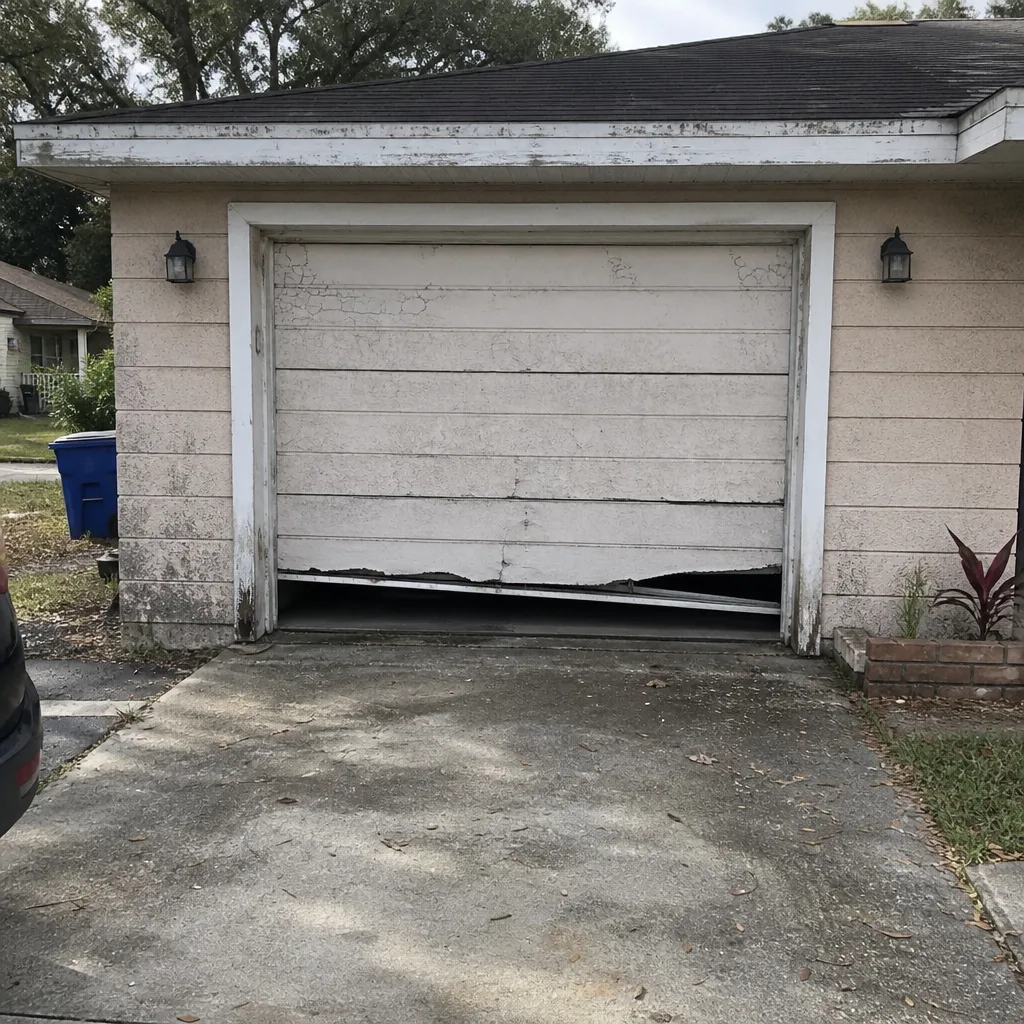
See the difference
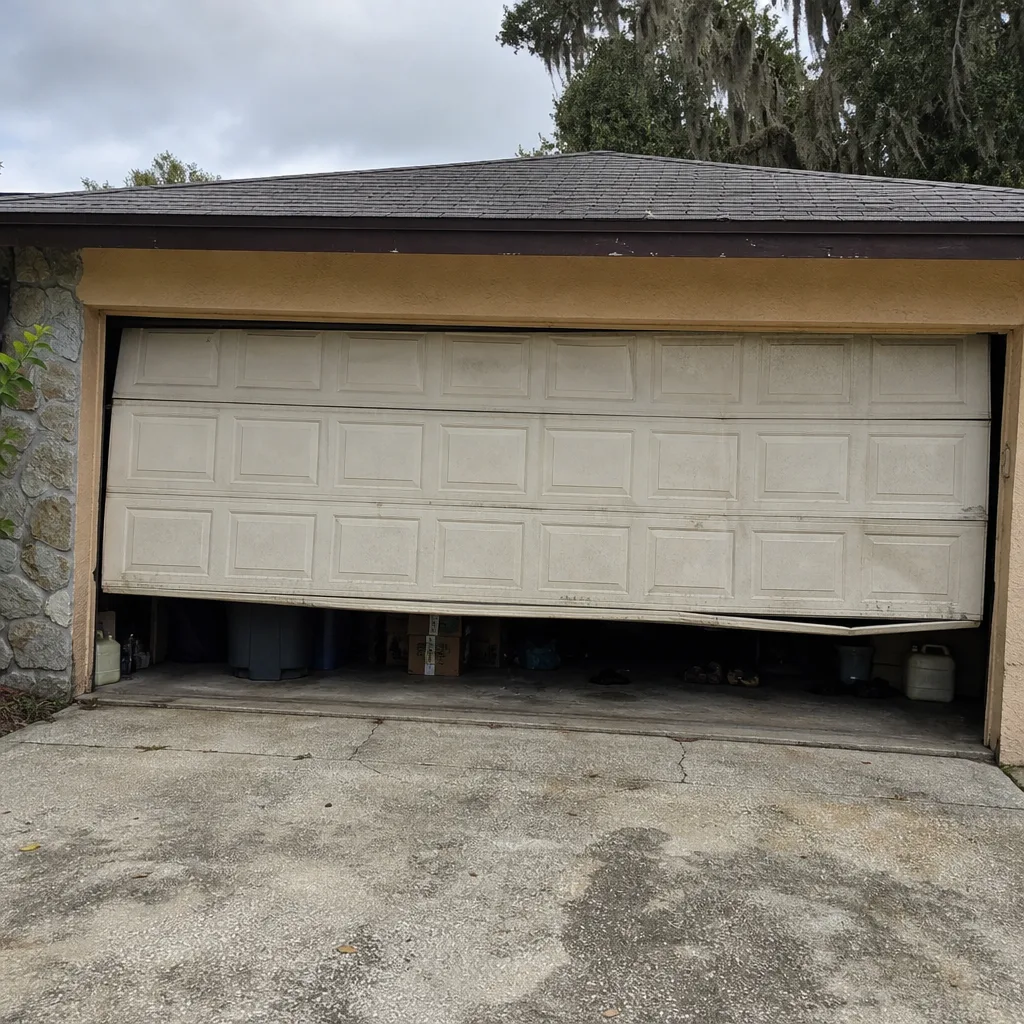 Before
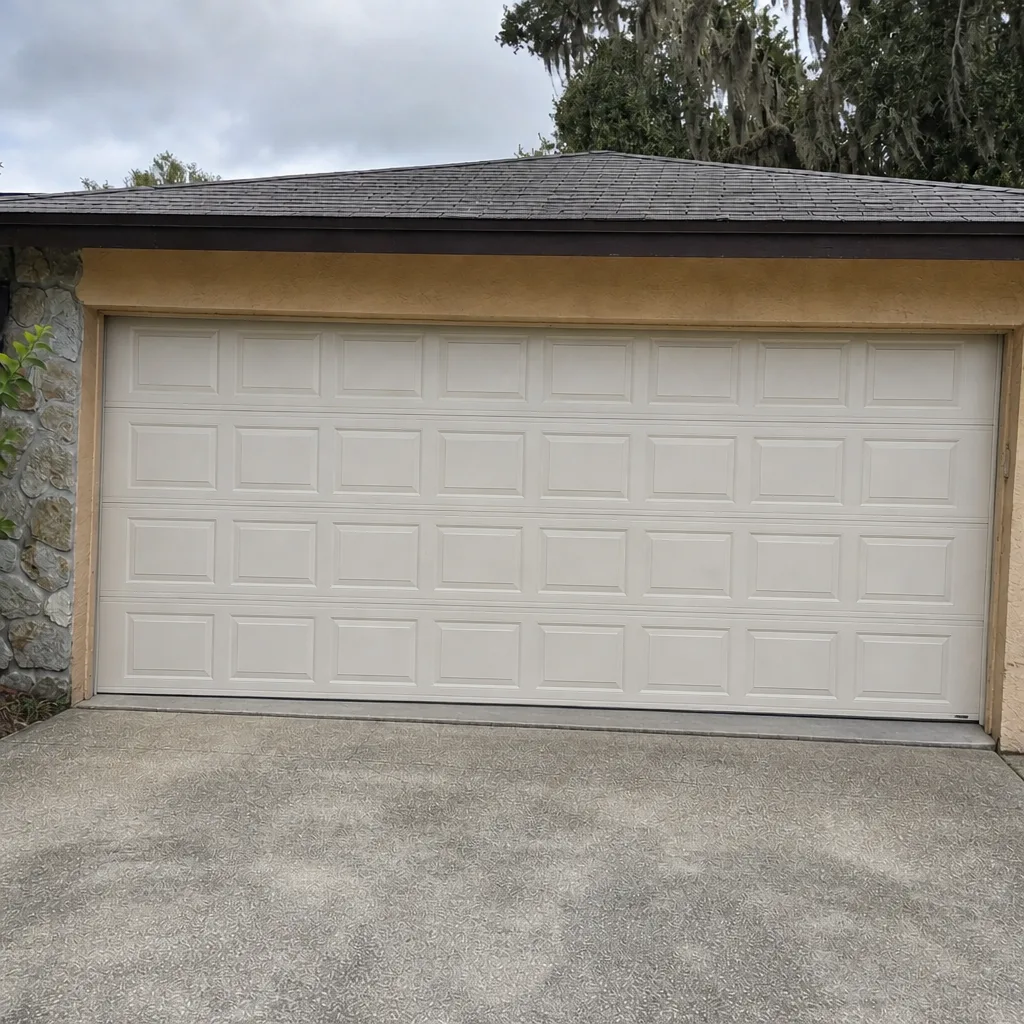 After
 Before
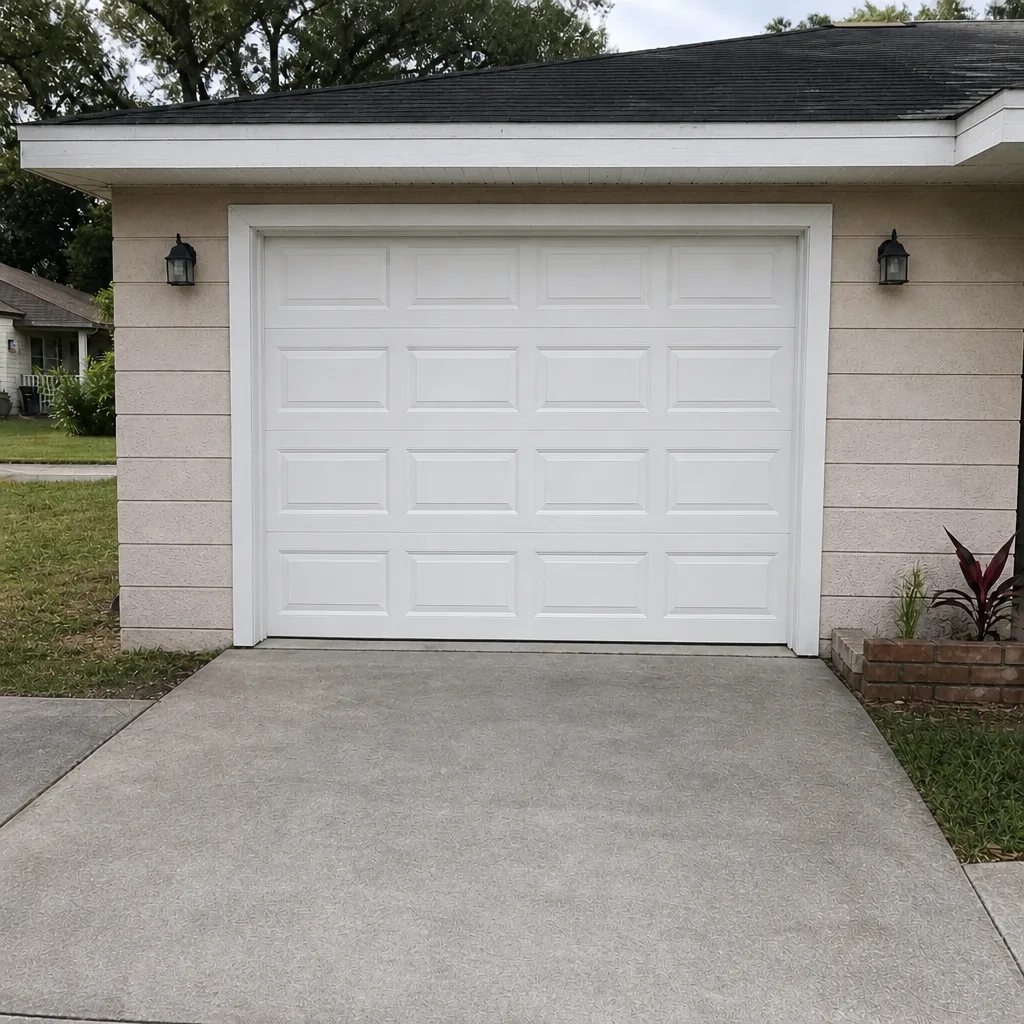 After
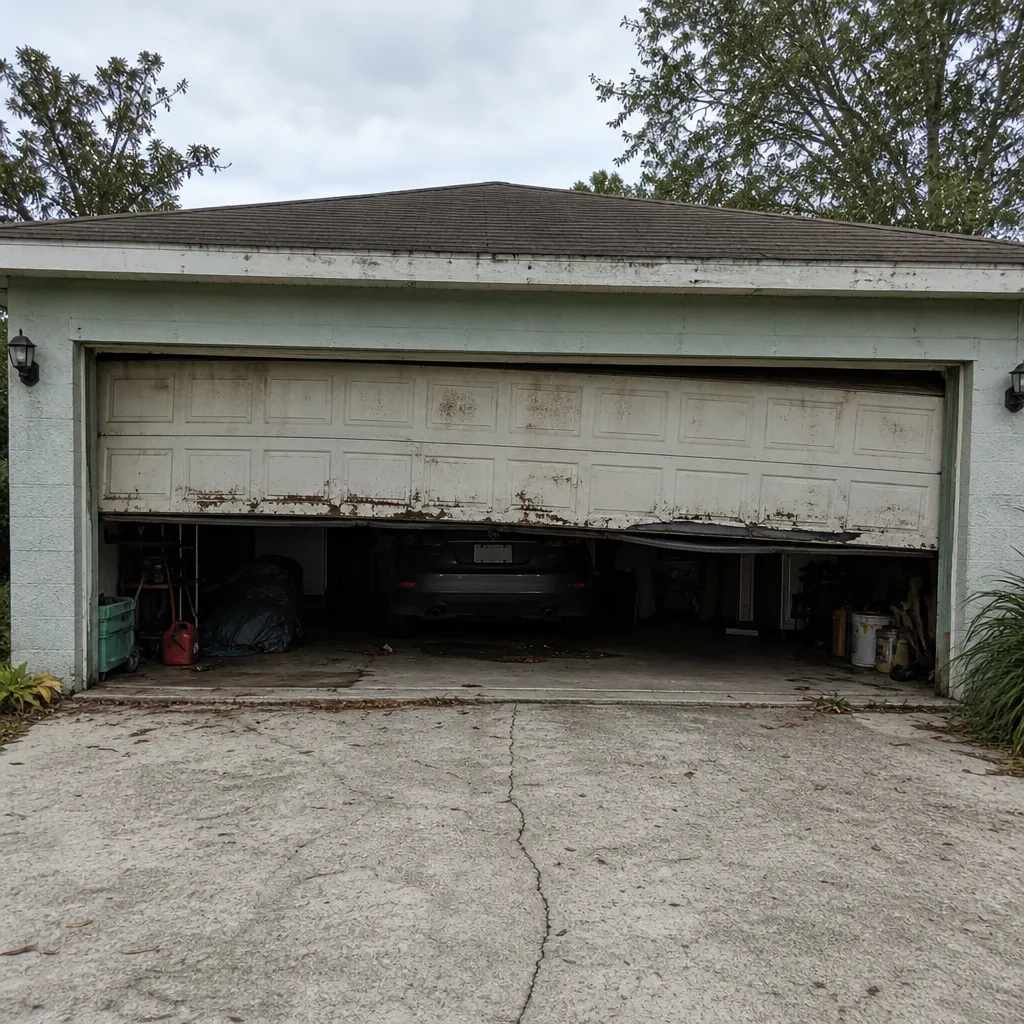 Before
 After
When to Call a Professional
Call a professional any time the door won’t operate under its own power, any time a spring or cable is visibly damaged, any time the door is off-track or out of balance, and any time you’re facing a named storm with a door that’s already compromised. Stop short of lifting a door with a broken spring, tightening a cable, or bracing an opening during a storm without current county guidance. Those are the moments that put homeowners in the ER. The rest of the prep, testing the manual release, saving the number, and inspecting the door, is yours to do.
Garage Door Repair Kenwood offers free estimates in Kenwood, and our technicians have up to 8 years of experience with both legacy and smart openers. Call (844) 699-3427 when the door won’t move, and we’ll walk you through the safest next step before anyone touches the door.
Frequently Asked Questions
A garage door emergency repair in Kenwood is priced by the job, and the written estimate is the price. Common emergency repairs include spring replacement (quoted per spring; a matched pair is usually replaced together and costs roughly twice a single spring), track realignment, cable replacement, and opener carriage or trolley repair. Ask for the free estimate before any work begins, and confirm the price is agreed before the technician starts. Call (844) 699-3427 for an exact quote.
Yes, a door stuck open is one of the emergency calls we take, and same-day service is often possible. Call (844) 699-3427 with your address, the door brand, and what the door is doing. If you can safely brace the opening from the inside while you wait, do that first. Don’t force the door closed if the tracks are bent or the spring looks damaged.
The written estimate sets the price. If the technician finds additional problems once the door is open (a bent track hidden by a panel, for example), you get an updated written quote before any of that additional work starts, and you decide whether to go ahead. What we don’t do is quote a number over the phone and then bill something different after the fact. Call (844) 699-3427 for a free estimate.
The local professionals we connect you with are licensed and insured as their state requires, and they specialize in garage doors rather than general handyman work. Emergency spring repair and cable work is one of the most technically demanding jobs in this trade, so a specialist matters. Ask any company you call for their credentials and confirm before work starts. Call (844) 699-3427 to book.
Try the release once with the door in the fully open position, where the trolley has the least load. If it still won’t budge, don’t force it. Call (844) 699-3427 and tell them the release is seized and a storm is forecast. Book the repair now, in calm weather, rather than waiting for landfall when every line is overloaded. If the opening can’t be closed, brace it per your county’s storm guidance.
Yes. We work on LiftMaster, Chamberlain, Genie, Clopay, Amarr, Wayne Dalton, Craftsman, and Raynor, plus other major brands. Whether you have a legacy mechanical opener or a smart-home-integrated system like a Chamberlain myQ or LiftMaster, we work on whatever’s already in your garage. Call (844) 699-3427 and tell us the brand and model if you know it.
The Bottom Line
A garage door emergency in Kenwood during hurricane season comes down to three things prepped before the storm: a manual release you’ve actually tested, an opening secured to current county guidance, and a real emergency contact saved in your phone. During the emergency, don’t force a seized release, don’t lift a door with a broken spring, and don’t brace an opening with scrap. After the storm, sort damage into cosmetic, structural, and unsafe, and only cosmetic damage gets to wait. The rest gets a professional assessment before the door runs again. We’re Garage Door Repair Kenwood, a full-service garage door specialist, and one call covers it.
Call (844) 699-3427 for a free estimate.
Written by the team at Garage Door Repair Kenwood.