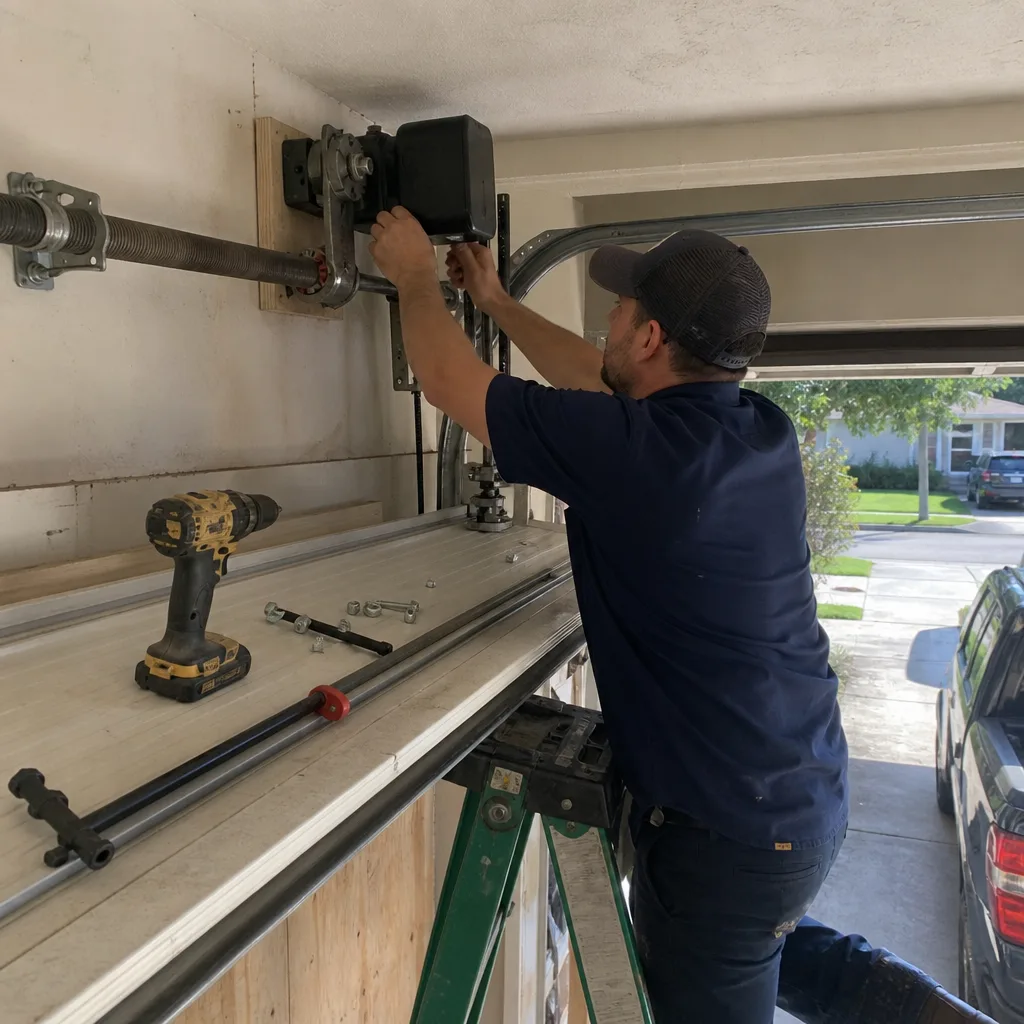
Last updated November 22, 2026
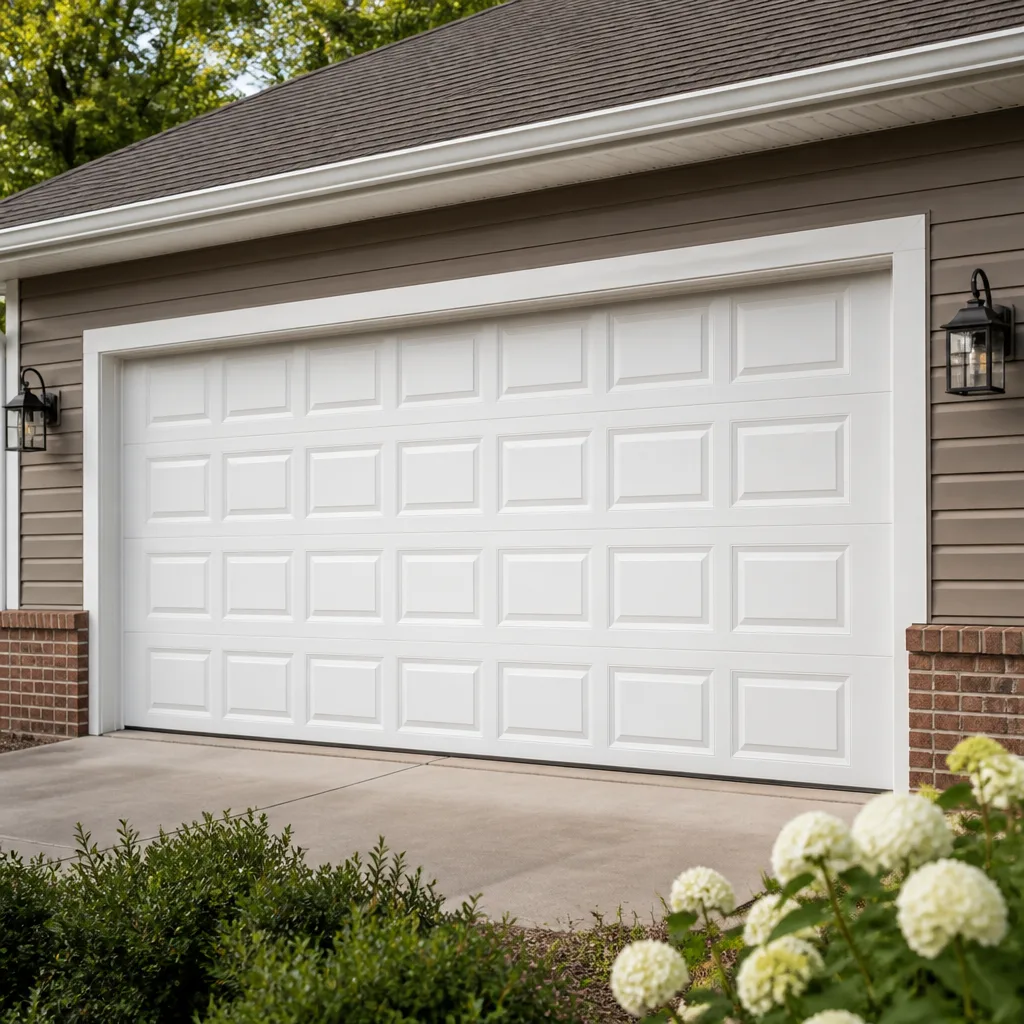 Raised-panel steel
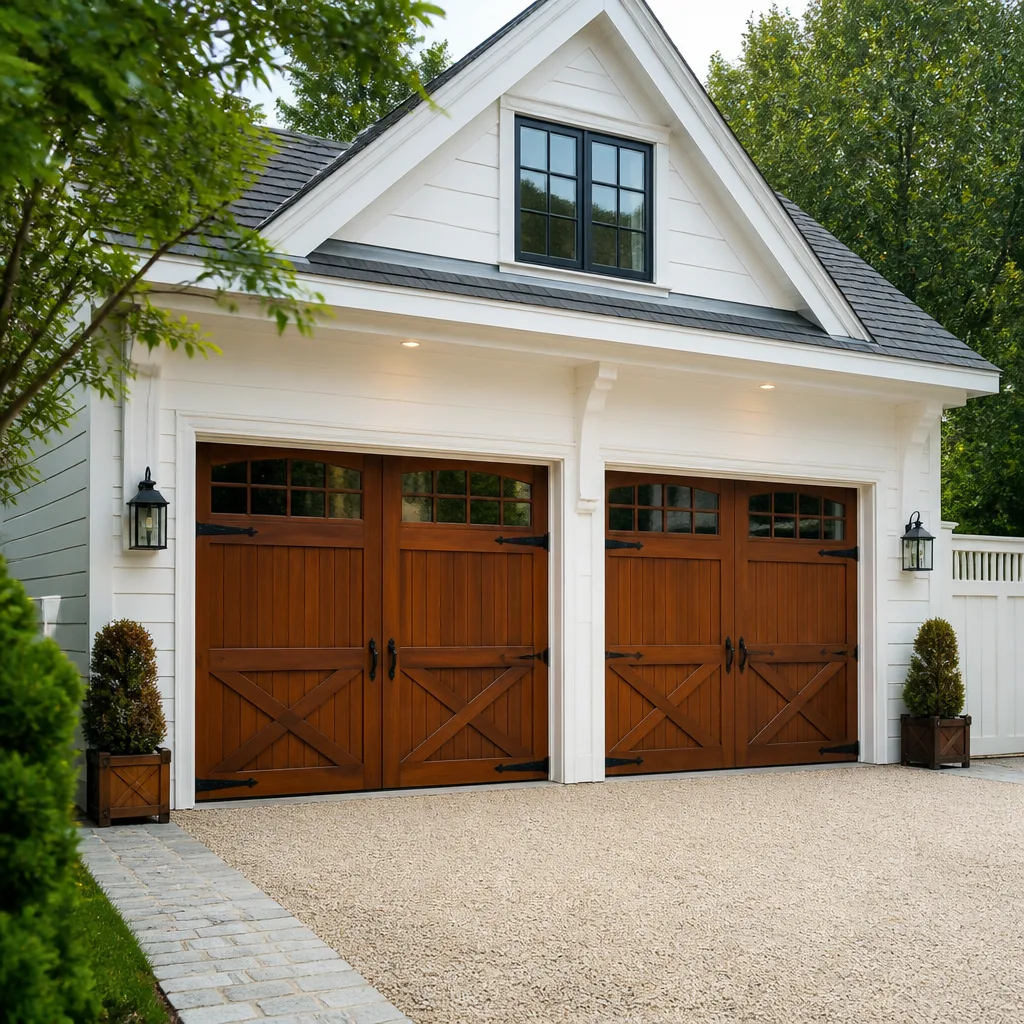 Carriage house
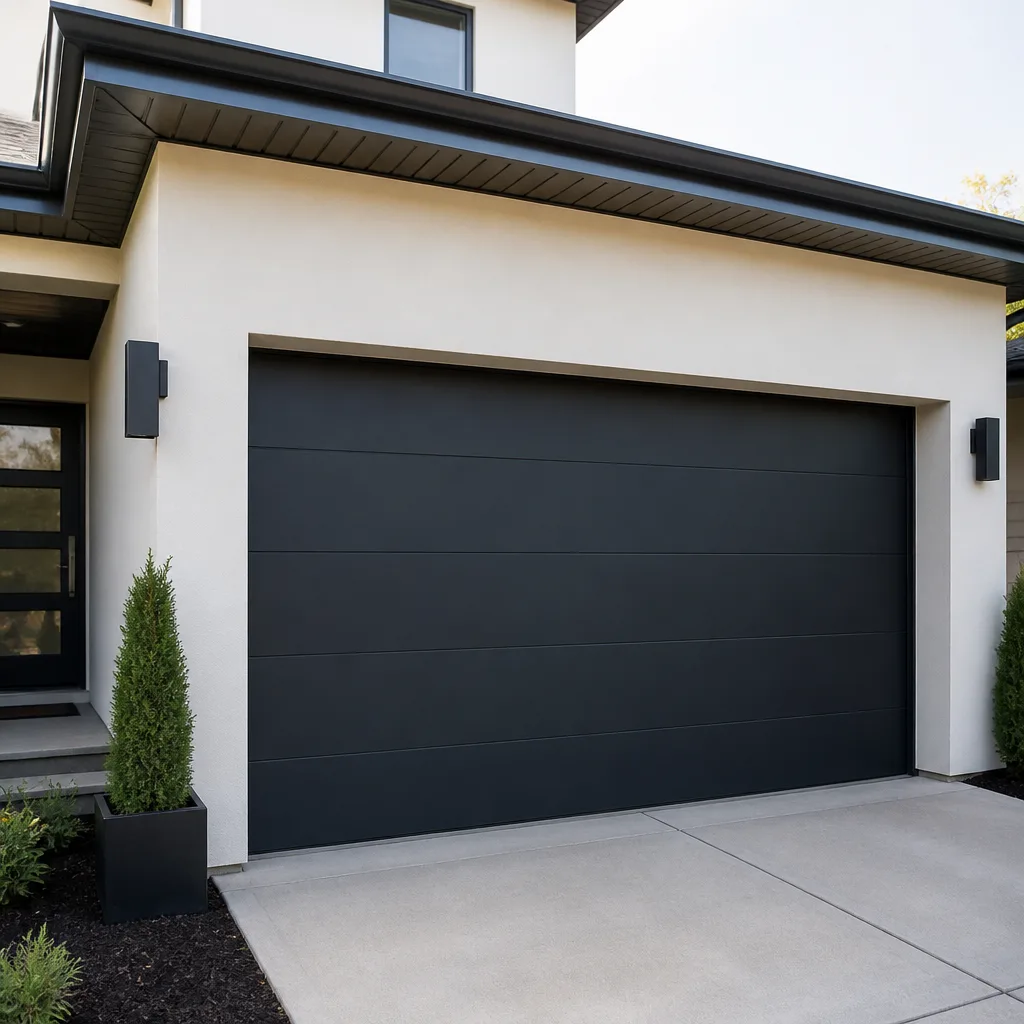 Modern flush
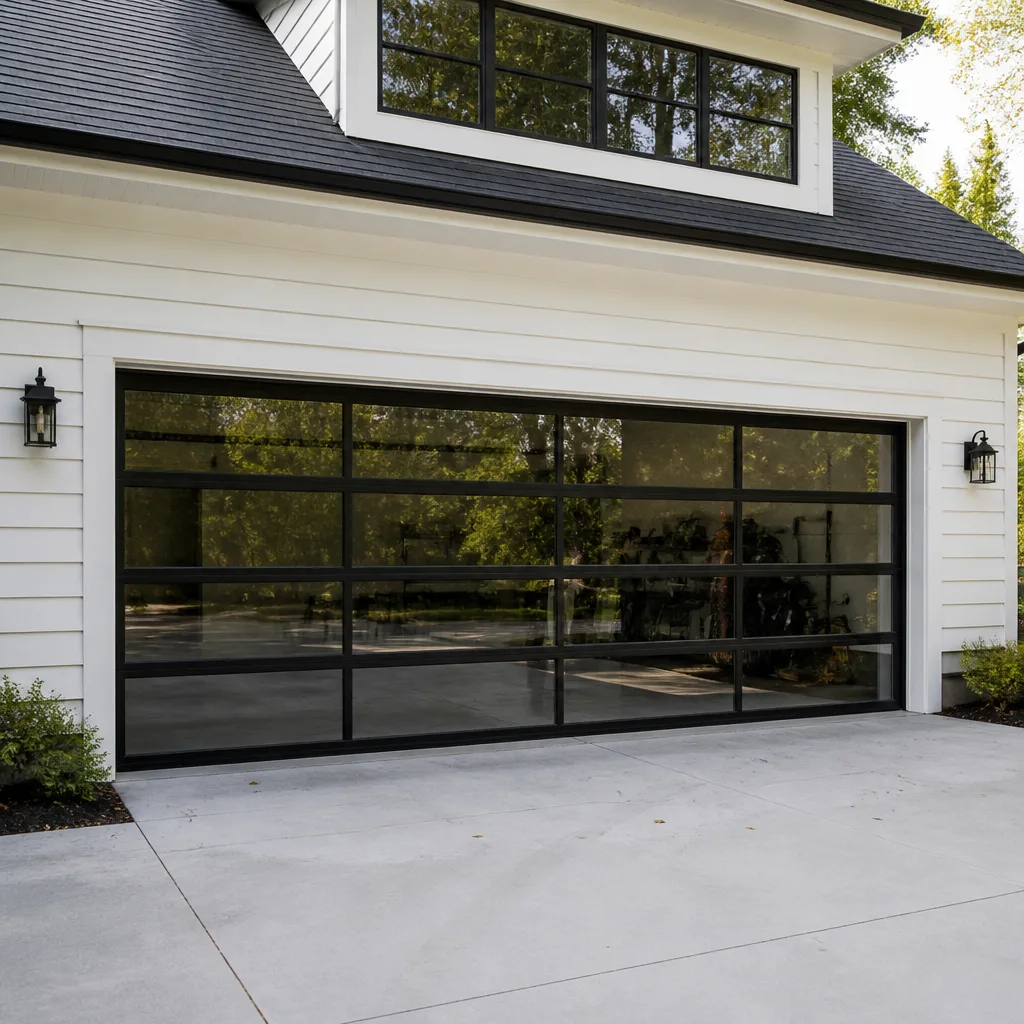 Full-view glass
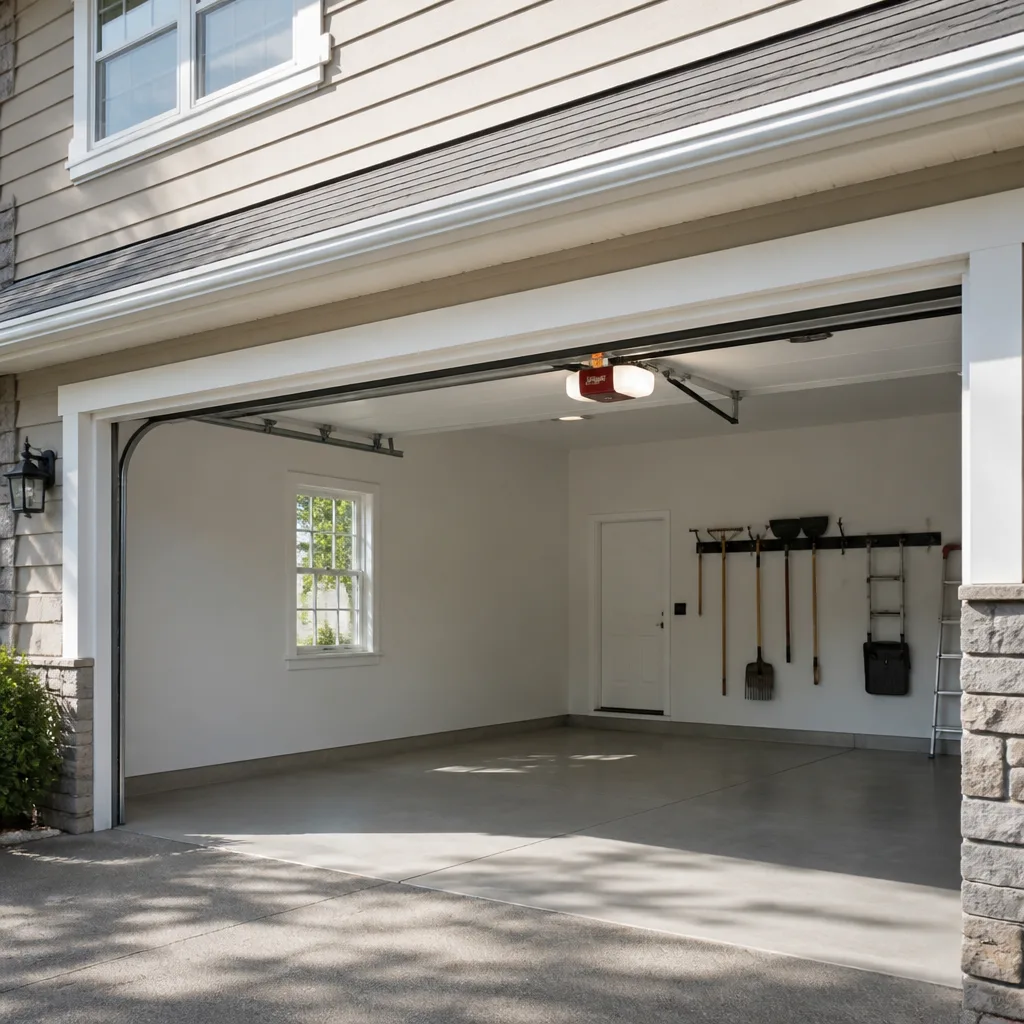 LiftMaster openers
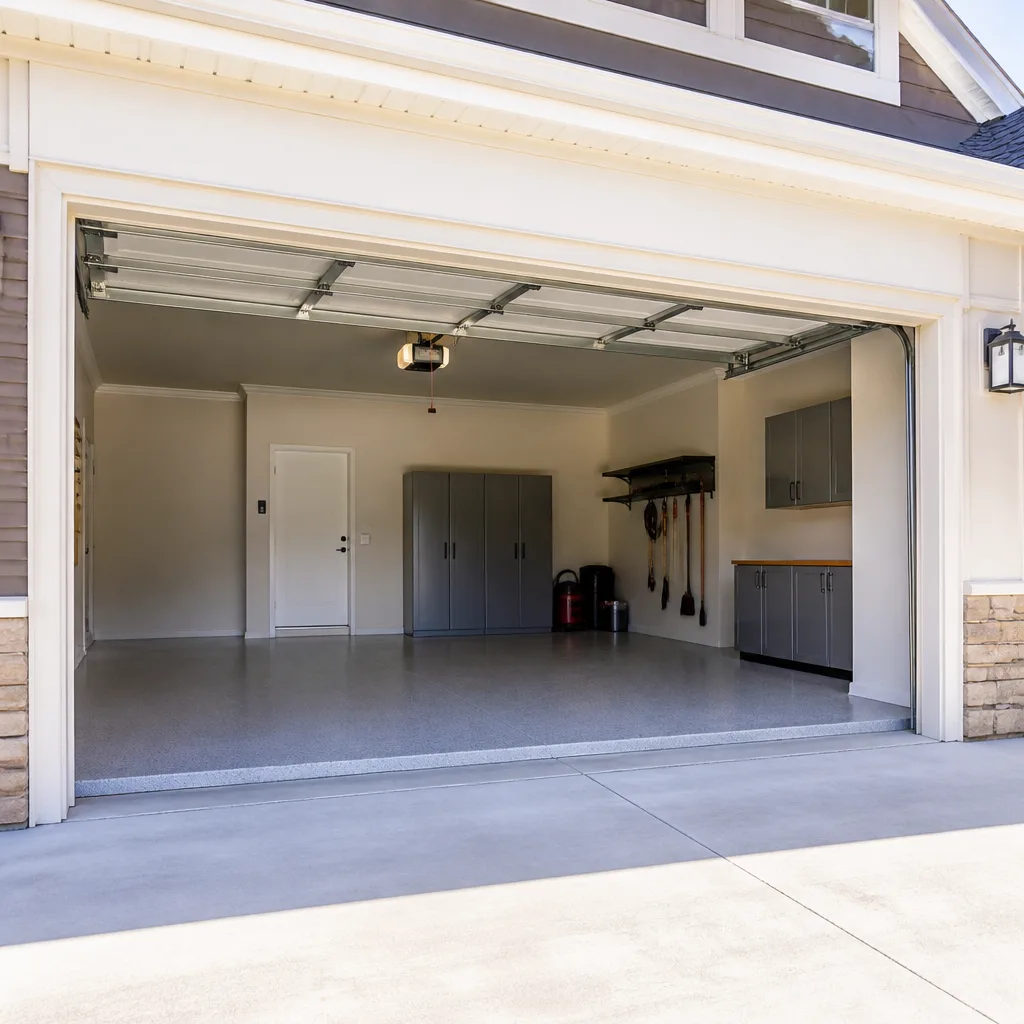 Chamberlain openers
Full 25-point door and opener safety check with every visit - springs, cables, rollers, tracks, and your LiftMaster or Chamberlain opener included
You get a price before we start. It does not change when the pro arrives.
Get your free estimateThe Complete Guide to Garage Doors in Kenwood
Most garage door advice online was written for a house somewhere else. National buying guides assume dry air, mild summers, and hardware that spends its life in a climate that never really pushes back. Kenwood isn’t that. The combination of coastal humidity, a long hurricane season, and a housing stock that runs from newer production builds to older block homes means the door in your garage is working under conditions the manufacturer’s lifespan estimate never accounted for. Hardware that a factory says should last a decade often tells a different story here. This guide is organized around the decisions Kenwood homeowners actually face: what to buy, what breaks first, what the code requires, and how to judge who should do the work. We’ll cover it in the order you’ll hit it.
Quick Answer
A garage door in Kenwood needs three things to last: the right material for humid, salt-influenced air, hardware built for corrosion resistance rather than the cheapest spec, and a technician who knows your specific brand. Steel and aluminum dominate here, springs and cables are the parts that fail first, and openers in older Kenwood homes tend to be legacy units while newer builds lean on connected systems like Chamberlain and LiftMaster. If your door is stuck, unbalanced, or making new noise, it needs professional eyes sooner than later.
Styles & brands we work with
- Raised-panel steel
- Carriage house
- Modern flush
- Full-view glass
- LiftMaster openers
- Chamberlain openers
Table of Contents
- How Kenwood’s Climate Changes Your Door’s Lifespan
- Steel vs. Aluminum vs. Fiberglass in Kenwood
- What Door Types and Openers Are Common in Kenwood
- Florida Code Requirements Every Kenwood Homeowner Should Know
- Diagnosing Your Problem: Springs, Cables, Panels, Sensors, or Openers
- Repair or Replace? A Decision Framework
- How to Evaluate a Kenwood Garage Door Specialist
- A Maintenance Routine for Humid Climates
How Kenwood’s Climate Changes Your Door’s Lifespan
Florida’s humidity alone can shorten the usable life of garage door hardware well below what manufacturer estimates assume, and those estimates were written for dry climates. Every hinge, roller, bearing, and torsion spring lives in the same air your car does – hot, wet, and salty enough that bare steel starts to oxidize faster than most people expect. That reality doesn’t mean doors here fall apart. It means the parts that fail first and the timeline they fail on are different from the national average, and a guide written for Arizona will point you at the wrong things.
Hurricane season adds a second layer. Wind-driven rain gets pushed against the door face and tracks, and every gap in the weather seal becomes an entry point for water and debris. Doors that were tight in April can be letting water into the garage by August. The good news: none of this is mysterious once you know what to look for.
Three patterns we see repeatedly in Kenwood homes:
- Springs fail earlier than the “10,000 cycle” label. Corrosion at the coil surface plus a lifetime of heat cycles adds up. Torsion and extension springs both fall into this pattern.
- Rollers and hinges seize. Nylon rollers last longer than steel ones in humid air. Steel rollers with marginal lubrication start to drag and squeal within a few seasons.
- Weather seals dry out and split. Rubber and vinyl seals crack faster under Florida heat and sun exposure, which then lets water into the garage and rots the bottom section of the door.
If you take one thing from this section, take this: in Kenwood, the parts you replace should be chosen for corrosion resistance, not just price. A cheap steel roller that lasts years in Denver may be fighting for its life here in three. That single shift in how you buy replacements changes how long your door system lasts.
Steel vs. Aluminum vs. Fiberglass in Kenwood
Most national guides rank door materials almost purely on insulation value and cost. In Kenwood, that ranking is incomplete, because humidity and salt air rearrange the tradeoffs. Here’s how the four main options actually behave in our climate.
Steel
Steel is the most common garage door material in Florida, and for good reason. It’s strong, it holds up to wind pressure, and it can be had with a factory finish that resists rust. The catch is that all steel is not equal. Lower-grade steel with thin paint and unsealed edges is a magnet for rust along the bottom section and around the hinges, especially in homes near the water. Ask specifically about gauge thickness and whether the door’s interior and exterior finish is factory-applied. A steel door that’s specified well for this climate will outlast a cheap one by years.
Aluminum
Aluminum doesn’t rust the way steel does, which makes it naturally suited to humid, salty air. The tradeoff is strength – a standard aluminum door is lighter and less impact-resistant than a comparably built steel door. Many full-view and glass-panel doors are aluminum-framed for exactly this reason. In Kenwood, aluminum is a good pick for modern-looking doors and homes with a covered lanai or carport where wind loads aren’t the governing factor. In a hurricane zone, the frame and panel rating matter more than the base metal; ask about both.
Fiberglass
Fiberglass doors hold up well to salt and humidity, and they never rust. The tradeoff is that fiberglass can chalk and fade when it’s directly exposed to strong sun, and thin fiberglass skins crack when struck. For a home with heavy daily use and a shaded garage face, fiberglass is a reasonable option. For a door facing southwest sun with no overhang, we usually steer homeowners toward steel or aluminum.
Wood and Wood-Composite
Real wood is beautiful and expensive to maintain in a humid climate. Unless you have the budget for annual sealing and refinishing, we generally don’t recommend it for a working Kenwood garage door. Wood-composite and steel-backed carriage doors give you the look without the maintenance routine.
If you’re weighing options, our guide to garage door installation walks through how the material choice interacts with door size, headroom, and opener selection.
What Door Types and Openers Are Common in Kenwood
Kenwood’s housing stock falls into three broad groups, and each has its own typical failure timeline.
Older block homes and mid-century builds
These often have single-car or older two-car doors with extension springs, steel rollers, and mechanical openers that have been repaired more than once. The openers are usually legacy units from Genie, Chamberlain, or Craftsman. Failure patterns: springs break first, then opener gears strip, then the door’s balance drifts enough that the opener motor labors. A Genie or older Craftsman opener can usually be repaired rather than replaced if the rails and motor are sound – which is why we look before we recommend a new unit.
Newer production builds
Newer homes in Kenwood typically have insulated steel doors in two-car sizes, torsion springs, and openers with smart-home integration – Chamberlain myQ and LiftMaster units are the most common. The doors themselves are generally in good shape, and the failures we see most are the springs (still subject to the humidity cycle) and the connected openers, which are more sensitive to power surges and to Wi-Fi changes than their mechanical ancestors. When the openers go, the fix is usually a board, a receiver, or an obstructions-sensor pair rather than a whole new unit.
Larger two- and three-car garages
Bigger doors mean heavier panels and, often, a single torsion shaft trying to carry the weight. Those installations are the ones that most need a proper spring upgrade when they fail. If a two-car door snaps a spring, we never replace one spring and leave the other; a matched pair is almost always the right call because both springs have the same cycles on them.
For homes in the Kenwood neighborhoods where yards are tight and driveways are short, door clearance and headroom matter at installation time. Our garage door repair team gets called most often to doors that were sized a little too tight and have been fighting their tracks ever since.
Florida Code Requirements Every Kenwood Homeowner Should Know
Florida has some of the most specific garage door requirements in the country, and they affect what hardware and installation methods are legally required for a door on a Kenwood home. This is one area where a national guide will actively mislead you if you’re buying a replacement door. Rules vary by county and municipality and are updated over time, so the precise requirements for your address should come from your local building department. What we can tell you is the shape of the rules.
Wind-load and impact requirements
Florida building code requires garage doors in designated wind-borne debris regions to meet specific wind-pressure and, in many cases, impact-resistance ratings. The requirement depends on your address, your home’s exposure category, and how close you are to the coast. A replacement door that doesn’t meet the rating for your address may not pass inspection – and may not comply when you go to sell. Your contractor should be able to give you the door’s design pressure rating and confirm it meets the requirement for your location.
Reinforcement and bracing
Compliant installations often require specific reinforcement hardware on the door sections and heavier hinges, rollers, and track anchors than you’d see in a non-hurricane state. This matters when a door is repaired as well as installed: if a previous repair replaced a reinforced hinge with a standard one, the door may no longer meet the original spec. If your home was built or the door was replaced in an earlier era, it’s worth having the existing bracing checked.
Permits
Most Florida municipalities require a permit for garage door replacement. Ask your city’s building department directly what your address needs; the answer is often a five-minute phone call. Skipping the permit can create real problems at resale or after a storm claim.
If you’re not sure whether your current door meets code, we can take a look along with any repair – call (844) 699-3427.
Diagnosing Your Problem: Springs, Cables, Panels, Sensors, or Openers
One of the most useful things any homeowner can learn is how to categorize a garage door problem before calling anyone. The category determines urgency, cost range, and whether the door is safe to operate at all. Work through these questions in order.
- Does the door move at all when you press the opener? If the motor runs but the door doesn’t, or the door hangs and sags, suspect a broken spring or a jumped cable. Stop operating it. This is the dangerous category.
- Did the door come down unevenly or is it hanging crooked? A single broken spring, a snapped cable, or a bent track will cause this. Don’t run the opener – it can turn a repairable problem into a panel replacement.
- Does the door go up but reverse halfway? Likely an obstructions sensor issue or a limit-travel setting. Safe to inspect yourself: check the eyes at the base of the tracks for debris or misalignment. If they’re clean and the door still reverses, the opener needs diagnosis.
- Does the opener run but the door barely moves or the motor struggles? Usually a balance issue – a worn spring, stretched cable, or dry rollers – or a failing opener drive gear. Don’t ignore it; the motor wasn’t built for that load.
- Does the door make loud popping, snapping, or banging noises? Popping is often a spring failure or a cable jumping a drum. Snapping can be a snapped spring or a broken hinge. Banging is usually loose hardware. Stop and call.
- Is the door visibly damaged – dents, cracks, bent track? Panel damage short of a full replacement can often be repaired, but bent track usually signals an alignment issue underneath.
- Is the opener the only problem? Remote not working, wall button not responding, Wi-Fi connection failing on a Chamberlain myQ unit, or the motor dead while everything else is fine. This is opener repair, and the door itself can usually stay in service.
Once you’ve placed your problem in one of those buckets, you’ll know whether you’re in “call today, don’t run the door” territory or “call this week, it’s fine” territory. If you’re not sure, call us and describe what you see – our team can usually tell from the description.
Repair or Replace? A Decision Framework
The most common question we get from Kenwood homeowners is whether a door that needs work should be repaired or replaced outright. There’s no single answer, but there is a reliable way to decide.
Lean toward repair when:
- The door sections are structurally sound – no rust-through, no cracks, no delamination of the outer skin.
- The problem is mechanical – a spring, a cable, a roller, a hinge, an opener board.
- The door was installed within the past decade and meets current wind-load requirements.
- The damage is confined to one section that can be replaced.
- The opener is sound and only a component has failed.
Lean toward replacement when:
- Multiple sections show rust, cracks, or sagging.
- The door pre-dates the current Florida wind-load requirements for your address.
- You’ve had two or more significant repairs in the past year and the track and hardware are all original-age.
- The door is chronically out of balance, meaning the current springs and hardware can’t be sized correctly for it.
- You want to add insulation, change the look, or upgrade to a door with better thermal performance for an attached garage.
What we don’t recommend is throwing a new opener at an old door. If the door itself is heavy or out of balance, a new opener will fail faster than the old one because it’s doing more work. The right sequence is: fix the door first, then talk about the opener.
A note on opener repair
Openers are a category of their own. A Genie unit from ten years ago may need a gear kit and a logic board; a LiftMaster unit from three years ago may need a new receiver or a re-pairing step. If the door itself is fine and the opener is the problem, our garage door opener repair page covers how the fix is diagnosed and what to expect.
How to Evaluate a Kenwood Garage Door Specialist
Here’s where most homeowners get burned: they call a general handyman, a big-box installer, or a regional chain because that name is familiar, and then get a job done by someone who has never seen their brand before. That doesn’t always go badly, but it goes badly often enough that it’s worth being deliberate about the choice. Here’s what actually matters for a garage door job in Kenwood.
Brand familiarity
Ask who they work on. A specialist who regularly handles LiftMaster, Chamberlain, Genie, Clopay, Amarr, Wayne Dalton, Craftsman, and Raynor is going to be able to diagnose your existing system instead of upselling you into a new one. A general contractor may only know the two brands their installer carries. On a repair, brand familiarity is the difference between fixing your opener and replacing it.
Symptom-specific expertise
Some jobs are easy for anyone. Others require real technical depth. Spring replacement is the clearest test: it’s a high-tension component where a wrong-sized spring can make a door unsafe, and a builder who doesn’t do it routinely may not size it correctly. Ask directly whether spring repair is a routine service, not a “we can do that too.”
Emergency capability
A door that won’t close at night is a home security problem, not a scheduling inconvenience. Ask whether emergency service is part of their offering or an occasional exception. If the answer is hedged, call someone who does emergency work as a core service.
Licensed, insured, and vetted
In Florida, garage door work should be done by someone who is properly licensed and carries insurance. Ask for the license number and their insurance certificate before work starts. Any contractor who won’t provide these is one you don’t want on your property.
Free estimate, written price
A reputable specialist gives you a free estimate and puts the price in writing before starting. The written estimate is what you pay – not a verbal number that grows when the job is done. If a contractor won’t commit to a written price up front, walk.
For the full range of what a proper specialist covers, our Garage Door Repair Kenwood page describes how each service fits together.
A Maintenance Routine for Humid Climates
A few minutes a season is enough to make a real difference in how long a Kenwood garage door system lasts. Here’s the routine we recommend.
- Once a month: run the door and listen. Any new noise, hesitation, or reversal is a signal. Test the balance: pull the release, lift the door halfway, and let go. It should stay roughly in place, not crash down or fly up.
- Once a month: check the obstructions sensors at the base of the tracks. Clear any debris, wipe the lenses, and confirm the door reverses when you break the beam.
- Every three months: wipe down the bottom weather seal. In humid climates the seal collects dirt and moisture and starts to break down. Replace any section that has cracked or pulled away from the door.
- Every three months: inspect hinges, rollers, and springs visually. Look for rust, wobble, or a spring that looks stretched or separated. Do not touch a spring to test it – a broken torsion spring can release stored energy with no warning.
- Once a year: have the springs, cables, and balance checked by a technician. A worn spring is much easier to replace on a scheduled visit than in an emergency. This is also the right time to have your track alignment verified.
- Before hurricane season: inspect the door face and seal for gaps, check the wind-load rating sticker if your door has one, and confirm the door is fully weather-tight. If your door may not meet current requirements, this is the moment to find out.
You can handle items 1 through 3 yourself safely. Items 4 through 6 are where trained technicians should take over – and item 6 in particular is worth doing before the first named storm forms, not after.
Common Mistakes to Avoid
- Replacing only one spring when both are the same age. Springs wear together, so replacing one leaves the other ready to fail the moment the new one is installed. Replace matched pairs together.
- Choosing a material on price alone. The cheapest steel door in a dry market and the cheapest steel door in Kenwood are not the same product. Corrosion resistance and finish quality matter more here than the price difference between tiers.
- Ignoring local wind-load requirements when replacing a door. A door that doesn’t meet current requirements for your address can fail inspection and complicate a future sale. Confirm the rating before you buy.
- Running the opener on a broken door. A door with a broken spring is under strain in the wrong direction. Keep it closed, put the opener in manual, and call for service.
- Skipping the permit. Most Florida municipalities require a permit for a replacement door. Skipping it creates paperwork problems later that are much harder to solve than the original permit.
- Buying a new opener to fix a door problem. If the door itself is the issue, a new opener won’t solve it and may fail faster because it’s being asked to do more work.
- Hiring a general contractor for a spring job. Springs are safety-critical, high-tension components, and not every builder or handyman is comfortable sizing and testing them correctly. Ask directly whether it’s routine work.
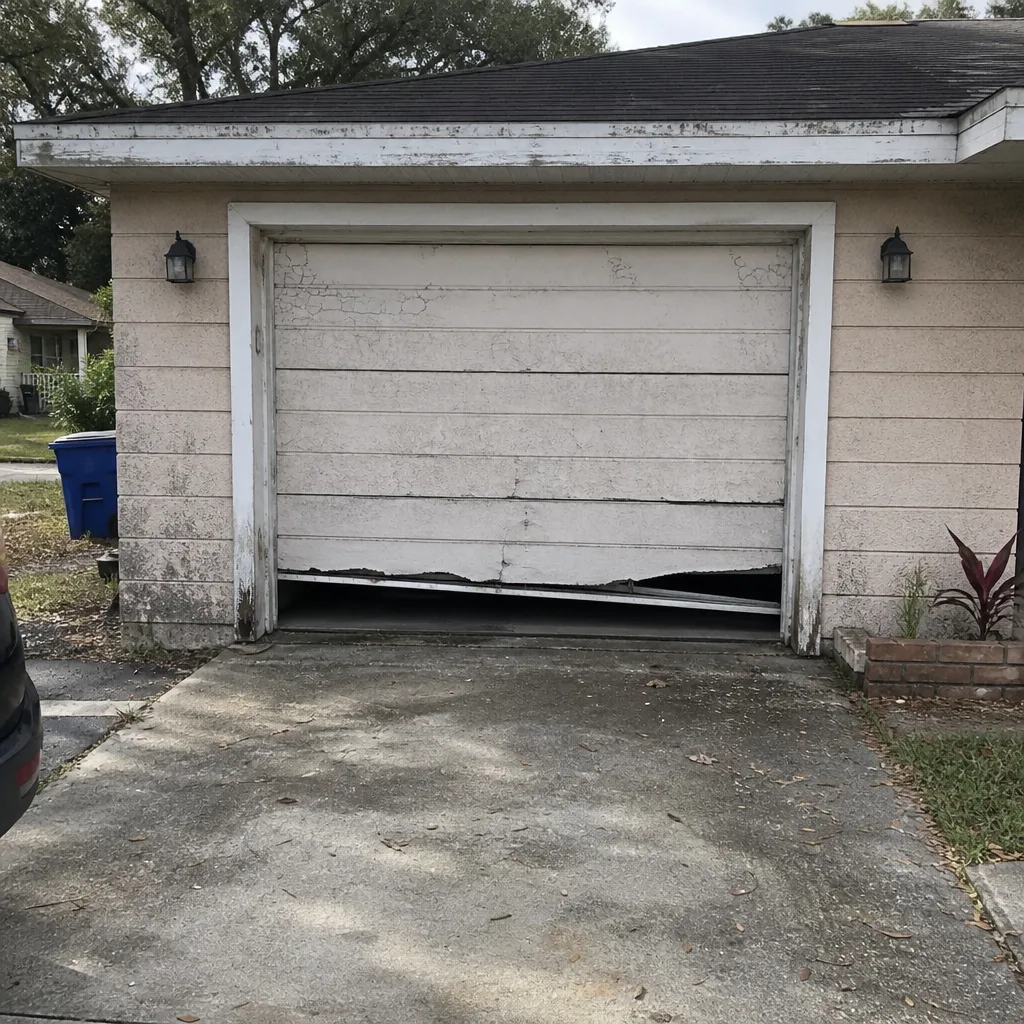
See the difference
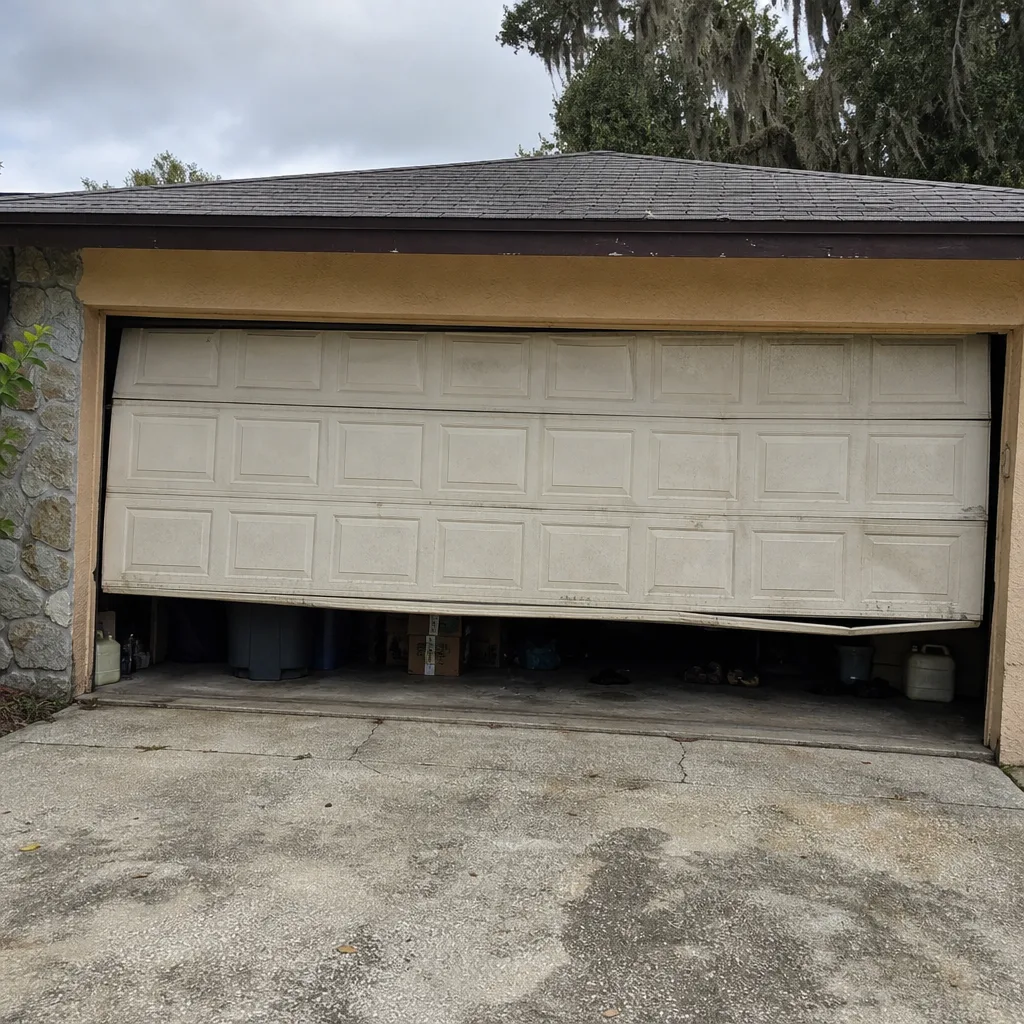 Before
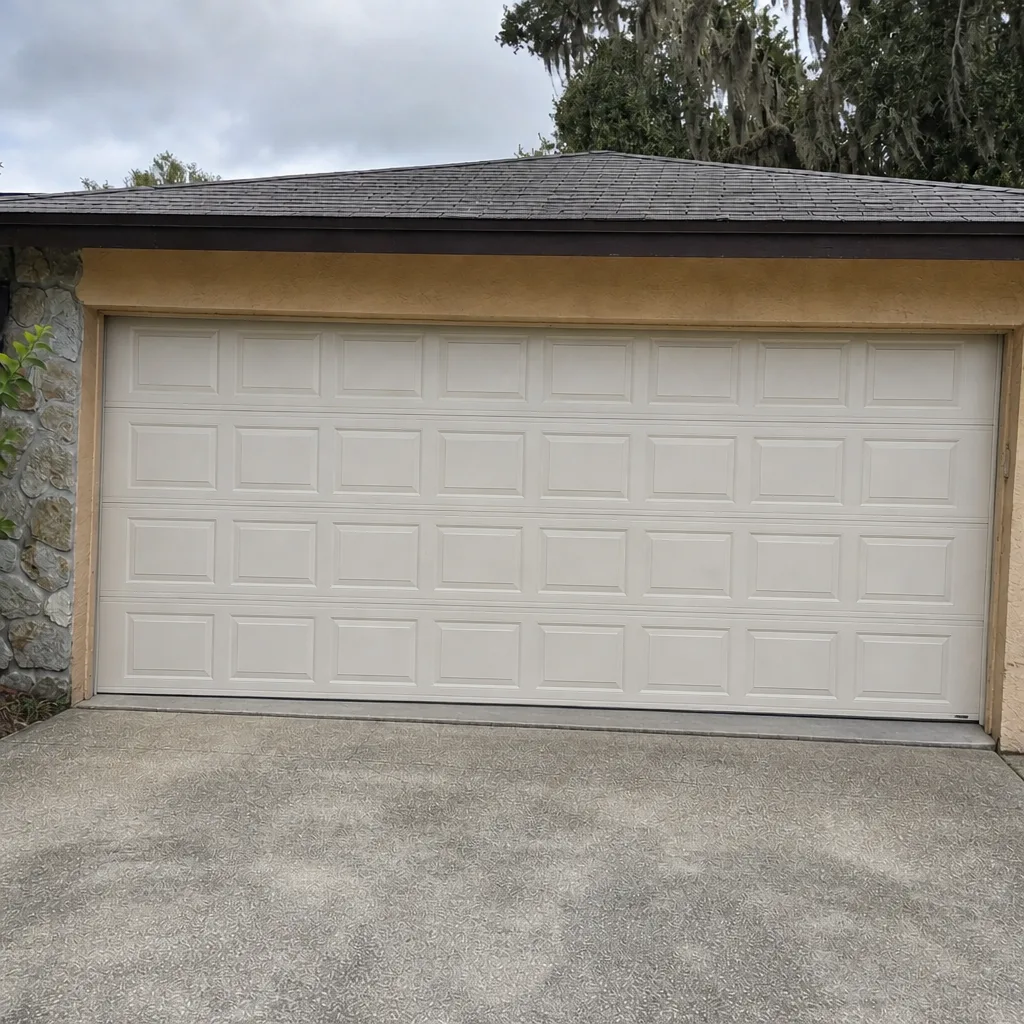 After
 Before
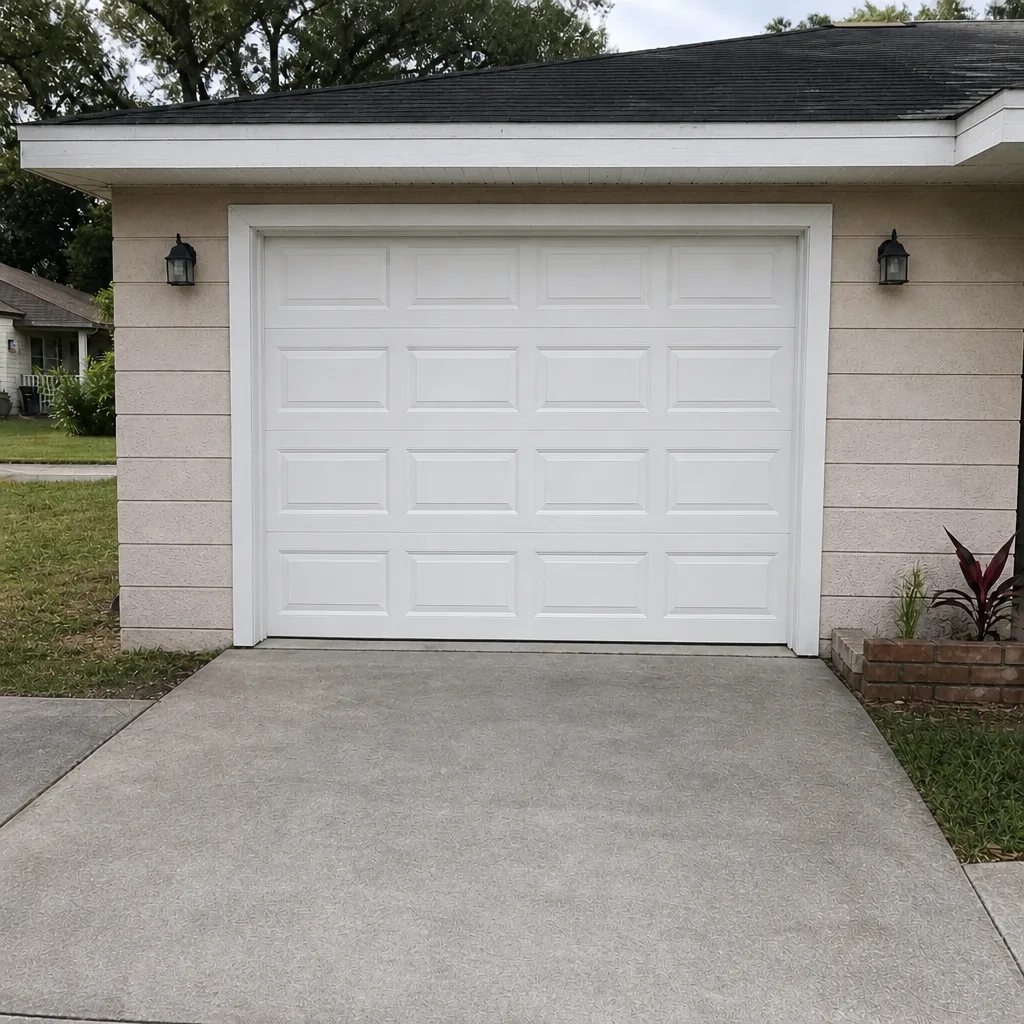 After
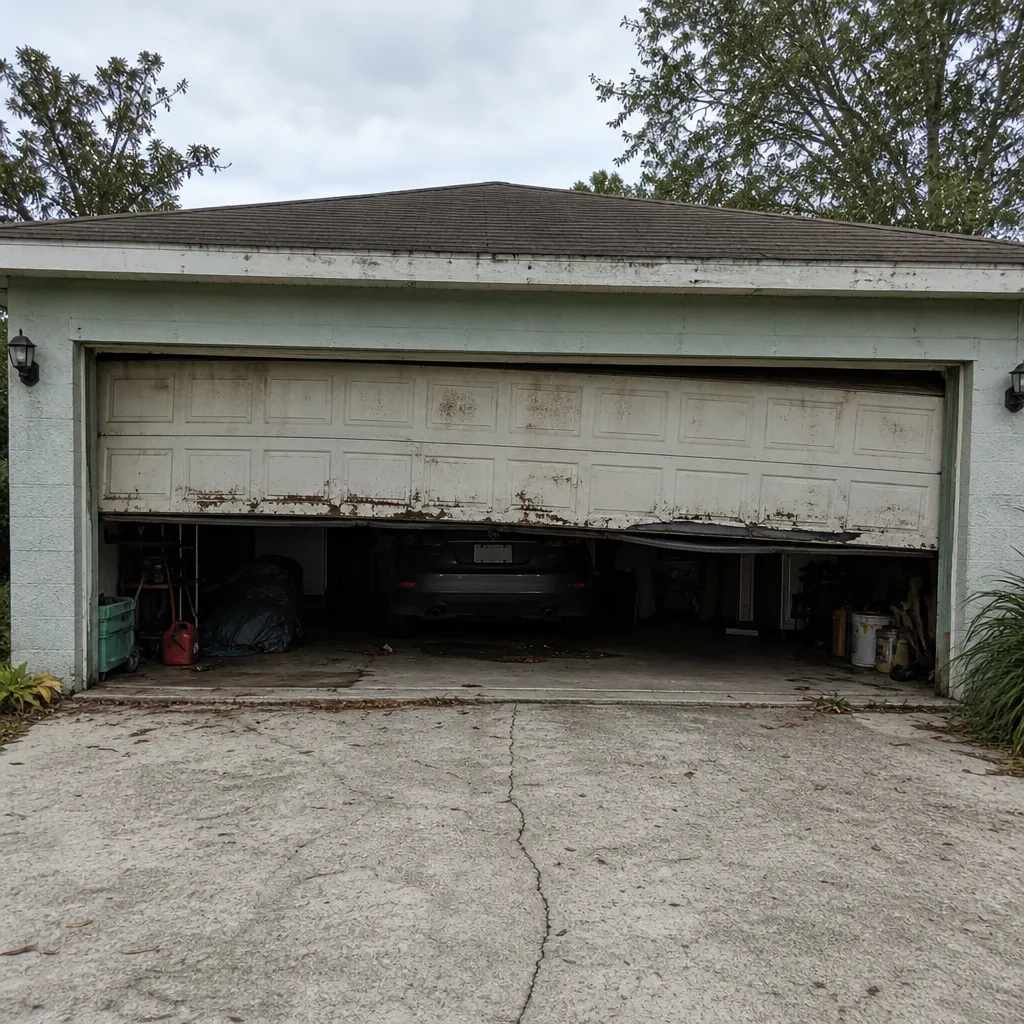 Before
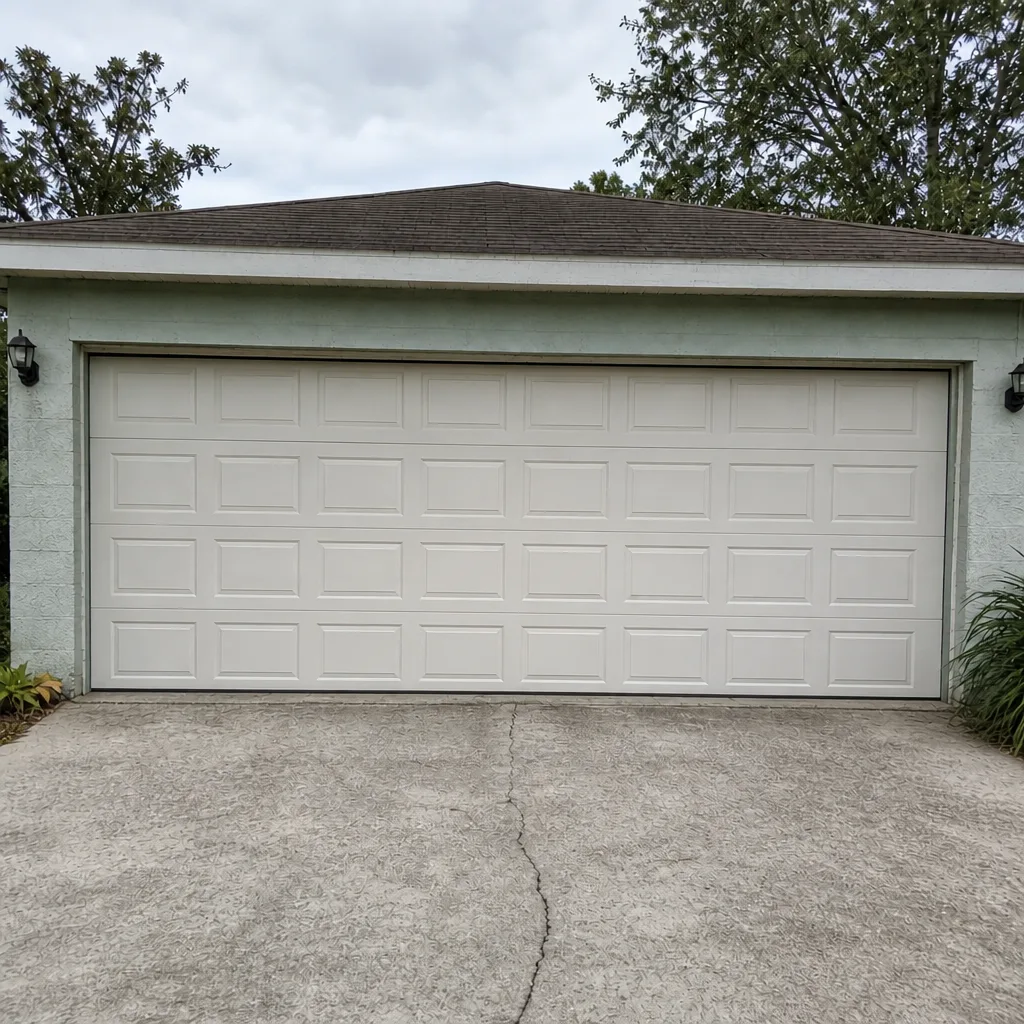 After
When to Call a Professional
Call a professional immediately in these situations: a torsion or extension spring has visibly snapped or looks detached; the door is hanging crooked or one side has dropped; the opener motor runs but the door doesn’t move; the door makes a loud snapping or banging noise; the door will not close fully and you can’t correct it with the obstruction sensor; or the door has visible structural damage to a section, the track, or the cables. In any of those cases, stop operating the door, put the opener into manual release if you can do so safely, and call. Only a trained technician should work on a broken or suspected-broken spring. For scheduled work – a worn hinge, a noisy roller, a door that hesitates but still moves, a smart opener that won’t connect – call during normal hours and get on the schedule. Garage Door Repair Kenwood offers free estimates in Kenwood – call (844) 699-3427.
Frequently Asked Questions
Spring replacement in Kenwood is priced per spring, and a matched pair is usually the right call when both springs are the same age – a pair costs about twice what a single spring costs. The exact price depends on the spring type, size, and door weight, and it’s always confirmed in a written estimate before work starts. Because both springs on most doors are replaced together, ask for a pair price when you call. Call (844) 699-3427 for an exact quote – estimates are free.
No. Garage door springs are high-tension mechanical components that can cause serious injury if mishandled. A torsion spring under load stores an enormous amount of energy, and even experienced homeowners without proper training on that specific system get hurt. Replace the hinge, roller, or weather seal yourself if you’re comfortable; leave the spring and cable work to a technician. Our team handles spring repair as a routine service, not a specialty – call (844) 699-3427 for a free estimate.
Yes, and the difference is measurable in the failure timeline. Florida’s humidity can shorten the usable life of door hardware well below what manufacturer estimates assume, because those estimates were written for dry climates. Rollers, hinges, and springs all see faster wear here than the labels suggest. Choosing corrosion-resistant parts when you replace anything – nylon rollers instead of steel, galvanized hinges, a well-finished door – is the single biggest lever a Kenwood homeowner has. If your door is already showing rust or sounding dry, call us at (844) 699-3427 for a free assessment.
We work on your brand, not just ours. We service LiftMaster, Chamberlain, Genie, Clopay, Amarr, Wayne Dalton, Craftsman, and Raynor equipment across Kenwood. That matters most on repair quotes, because a specialist who knows your existing system can often fix it instead of selling you a replacement. Whether it’s an older Genie opener or a newer Chamberlain myQ unit, the diagnosis starts with what’s already in your garage. Call (844) 699-3427 with the brand and model if you have it, and we can usually tell you what to expect.
Yes. Florida building code requires garage doors in designated wind-borne debris regions to meet specific wind-load and impact ratings, and requirements vary by address, exposure, and county. The exact requirement for your home should come from your local building department, not from a national buying guide. A compliant installation also often requires specific reinforcement hardware on the door sections and heavier track anchors. If you’re not sure whether your current door meets code for your address, that’s worth checking before you buy a replacement – call us at (844) 699-3427 and we can help you sort it out.
Often, yes. Emergency garage door service is a core part of what we do, not an add-on, and a door that won’t close is the kind of call we prioritize. Exact availability depends on the day and your location in Kenwood, and we’ll be straight with you about timing when you call. If the door is stuck open, put nothing valuable in the garage and call right away. Call (844) 699-3427 and we’ll schedule you as quickly as we can.
The Bottom Line
The garage door in a Kenwood home is working harder than most people realize. Humidity, salt air, and a long hurricane season all push hardware past the assumptions baked into national buying guides, which means the parts you choose and the technician who installs them matter more here than they would in a drier climate. Buy for corrosion resistance, replace springs in pairs, know your wind-load requirements before a replacement, and match the brand knowledge of whoever you hire to the system that’s already in your garage. Most of the guide above comes down to a single idea: the right fix for your door is specific to your door, not to a generic checklist. Keep the routine small and consistent, call early on the symptoms that signal real trouble, and treat the spring and cable work as a job for a trained professional.
The team at Garage Door Repair Kenwood handles every stage of a door’s life – spring repair, opener repair, installation, and emergency service – and we work on the brands you already have: LiftMaster, Chamberlain, Genie, Clopay, Amarr, Wayne Dalton, Craftsman, and Raynor. Our technicians have up to 8 years of experience, and every estimate is free and in writing before any work starts. When the door won’t move, one call covers it. Reach us at (844) 699-3427 for a free estimate.
Written by the team at Garage Door Repair Kenwood.